Full Private Health Check in the UK: What's Included

Full Private Health Check in the UK: What’s Included

Written by Dr. Simon Khela MBChB MRCGP, GMC Registered Doctor

_________________________________________________________________________

A question I'm asked constantly, usually by patients who've seen an advert or a colleague's recommendation, is deceptively simple: what actually happens at a private health check? The honest answer is that it varies enormously between providers, and the marketing around these packages doesn't always make that clear. Some so-called “comprehensive” checks are little more than a blood test and a chat; others genuinely cover a wide range of physical measurements, blood work, and screening relevant to your age and sex.

This article sets out what a properly put-together full health check typically includes, how it compares with what the NHS already offers for free, and, just as importantly, what it can't tell you. A good health check has real value. It isn't, and shouldn't be sold as, a guarantee that nothing is wrong.

Quick Answer: What's Usually Included

A genuinely comprehensive private health check typically includes:

  • A consultation covering your medical history, family history, lifestyle and any symptoms
  • Physical measurements: blood pressure, resting heart rate, height, weight and BMI
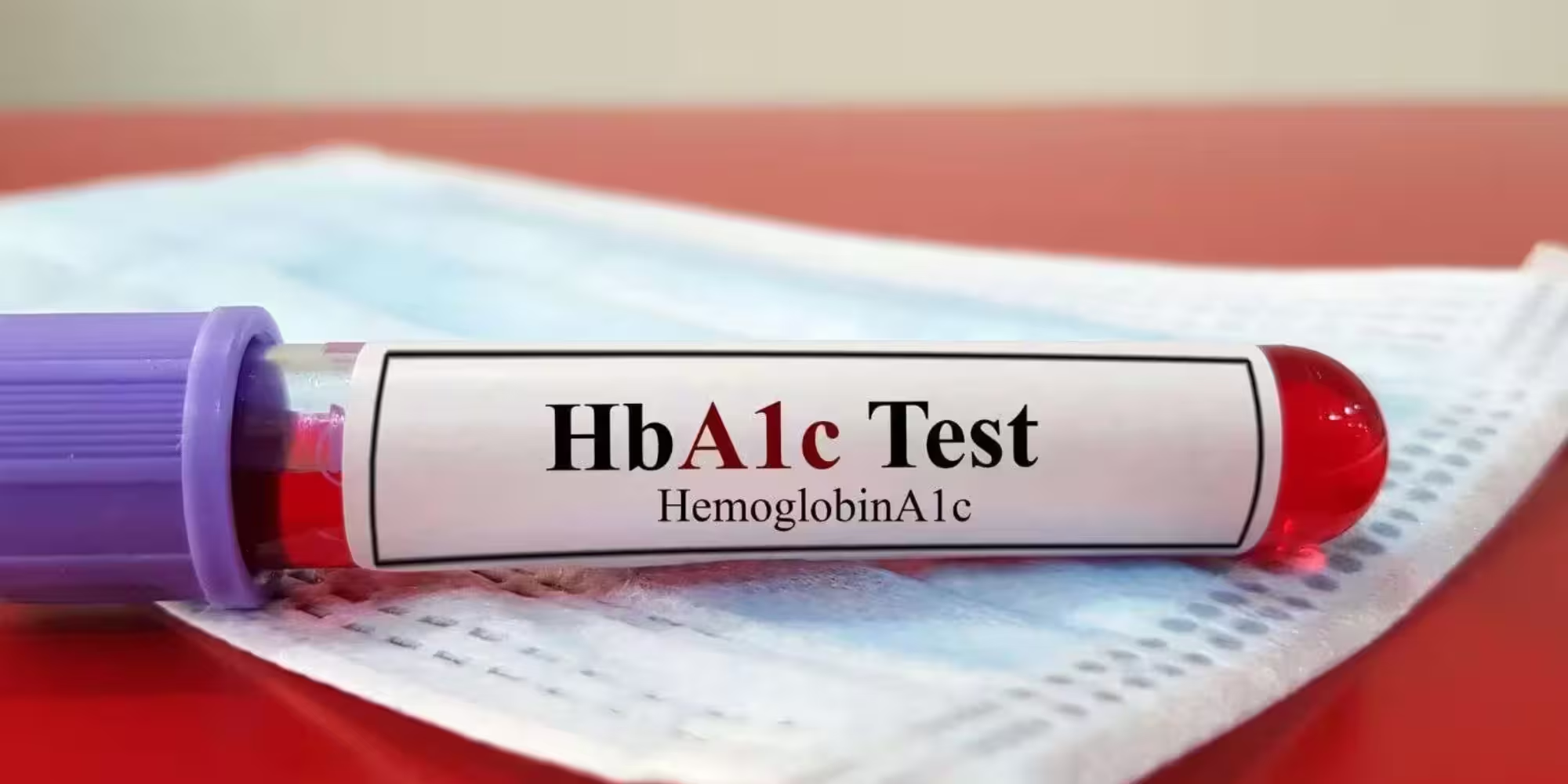
  • A blood panel covering full blood count, kidney and liver function, cholesterol (lipid profile), blood glucose or HbA1c, and thyroid function, often with additional markers depending on the package
  • A urine test (urinalysis)
  • An ECG to check your heart's electrical activity
  • Age and sex-appropriate screening components, such as a cervical smear, prostate-specific antigen (PSA) test, or discussion of breast or bowel screening
  • A results consultation with a doctor, including a personalised action plan

What's not usually included unless you specifically pay for it as an add-on: whole-body MRI, genetic testing, and advanced tumour marker panels, all covered in more detail below.

Why People Choose a Private Health Check

In England, the NHS Health Check already offers a free assessment every 5 years for adults aged 40 to 74 who don't already have cardiovascular disease, diabetes, or related conditions, covering blood pressure, cholesterol, BMI and blood glucose. It's a genuinely good, evidence-based programme. It's also narrower in scope than most people assume, since it's specifically designed to catch cardiovascular risk factors, not to act as a general check of overall health.

Private health checks tend to appeal to people who fall outside that age bracket, want a broader range of tests than the cardiovascular focus of the NHS programme, prefer not to wait for their next scheduled check, or simply want the reassurance of a same-day, unhurried appointment rather than a 20-minute nurse-led review.

NHS Health Check vs Private Health Check

Factor NHS Health Check Private Health Check
Cost Free Paid, varies by clinic and package
Eligibility Ages 40–74, no existing cardiovascular disease/diabetes Any adult, at any time
Focus Cardiovascular risk (blood pressure, cholesterol, BMI, glucose) Broader, can include multiple organ systems and cancer screening components
Frequency Every 5 years As often as clinically appropriate, or as chosen
Waiting time Depends on local authority commissioning Usually same-day or within days
Who delivers it Practice nurse, healthcare assistant, or pharmacist Varies; often a doctor-led consultation

The Core Components of a Full Private Health Check

Here's what each part is actually looking for, and why it's included:

  • Consultation and history: covers your symptoms, family history, medications, smoking and alcohol use, and lifestyle factors, which shapes which additional tests are actually relevant to you rather than applying a blanket panel to everyone.
  • Physical examination: blood pressure, resting pulse, height, weight and BMI, sometimes waist circumference, which together give a quick picture of cardiovascular and metabolic risk.

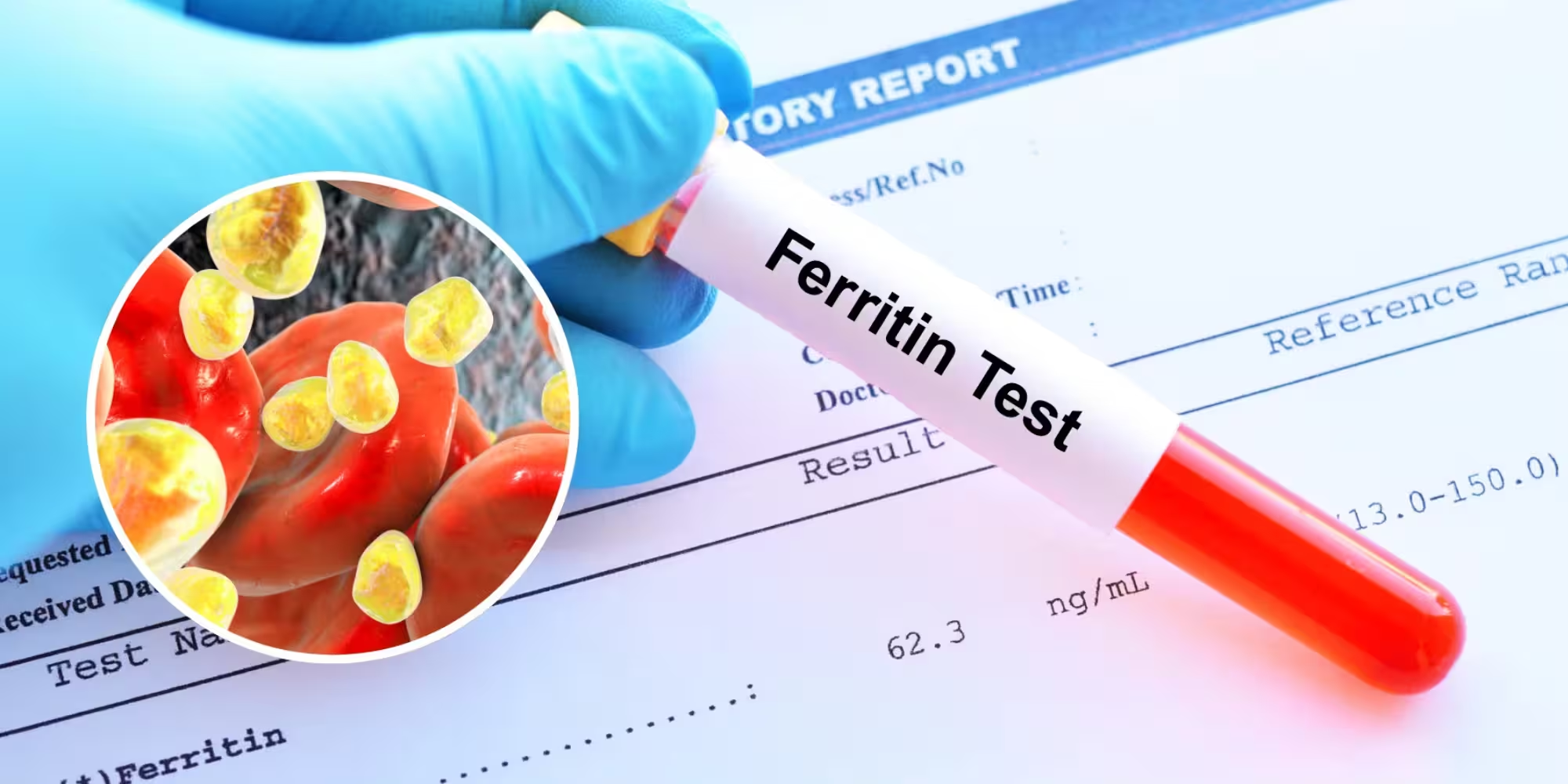
Blood tests: typically a full blood count (checking for anaemia or infection), kidney function (U&Es), liver function tests, a lipid profile measuring cholesterol, HbA1c or fasting glucose for diabetes risk, and thyroid function. Many packages also include vitamin D, B12, ferritin, and, for men, a PSA test, though PSA testing is something I always discuss individually given its genuine limitations around false positives.

  • Urinalysis: a simple dipstick test that can pick up early signs of kidney problems, diabetes, or urinary infection.
  • ECG: a brief recording of your heart's electrical activity, useful for detecting rhythm abnormalities, though it won't reliably detect narrowed arteries on its own.

Age and sex-specific screening: this might include a private cervical smear test for women in the relevant age range, discussion of breast or bowel screening eligibility, or a prostate discussion for men, aligned as closely as possible with what the national screening programmes already recommend rather than duplicating or replacing them unnecessarily.

  • Results consultation: arguably the most important part. A good health check ends with a doctor talking you through what your results actually mean, not just a printout of numbers with reference ranges.
  • Optional extras sometimes bundled in: vision and hearing screening, a basic lung function (spirometry) test, or body composition analysis, which can be useful additions depending on your occupation, age, or specific concerns, though they're not universally necessary.

What's Usually NOT Included Unless You Add It

Some genuinely useful-sounding tests are marketed as add-ons precisely because they're not appropriate for everyone as standard, and it's worth understanding why:

  • Whole-body MRI: sounds thorough, but it frequently picks up incidental findings of uncertain significance, which can lead to unnecessary anxiety and further investigation without a clear benefit for most people without symptoms or risk factors.
  • Extensive genetic screening: can be genuinely valuable for specific, targeted questions, such as a strong family history of a particular condition, but is a poor fit as a blanket addition to a general check.
  • Broad tumour marker panels: markers like CA-125 or CA-19-9 have real uses in monitoring known cancers, but perform poorly as screening tools in people without symptoms, generating false positives more often than genuine early detection.
  • DEXA bone density scans: useful for specific risk groups, such as postmenopausal women or those with risk factors for osteoporosis, but not something everyone needs as a default.

Choosing the Right Level of Check for You

A genuinely useful health check isn't one-size-fits-all. What's actually relevant depends on:

  • Your age and sex, which determine which cancer screening components are relevant and which are not yet, or no longer, appropriate.
  • Your family history, particularly of heart disease, diabetes, or specific cancers, which can justify additional or earlier testing.
  • Your existing risk factors, such as smoking, high blood pressure, or being significantly overweight.
  • Whether you have any current symptoms, in which case a health check isn't the right tool at all; symptoms warrant a proper clinical assessment, not a screening package.

If you're currently experiencing symptoms rather than looking for reassurance about your general health, booking a private GP appointment is the more appropriate route than a health check package, since screening tools are designed for people without symptoms, and a symptomatic problem needs to be properly worked up rather than screened for.

As a rough illustration: a fit and well 35-year-old with no family history and no symptoms is usually better served by a focused, lower-cost check than the most extensive package on offer. A 55-year-old with a family history of heart disease, a sedentary job and borderline blood pressure at their last check is a much stronger candidate for a comprehensive panel, simply because more of the additional tests are actually likely to be relevant to them.

Basic vs Comprehensive Health Check: A Comparison

Component Typical Basic Check Typical Comprehensive Check
Consultation length Short, focused Longer, in-depth history
Blood panel Core markers only (FBC, lipids, glucose) Extended panel: liver, kidney, thyroid, vitamins, PSA
ECG Sometimes included Usually included
Cancer screening components Rarely included Age/sex-appropriate components included
Results delivery Letter or online portal Face-to-face or video consultation with a doctor
Typical suitability Low-risk adults wanting a baseline Those with risk factors, family history, or wanting a thorough review

The Limitations of Health Screening (Worth Knowing Before You Book)

I think it's important to be candid here, particularly given my own professional background. The Royal College of General Practitioners has publicly raised concerns about non-evidence-based private screening, warning that tests offered outside the established national screening programmes can generate results of little or no value, and sometimes cause unnecessary worry rather than genuine reassurance.

This isn't a reason to dismiss health checks altogether, but it is a reason to be realistic about what they can and can't do. The UK National Screening Committee's own principles exist precisely because testing healthy people isn't automatically beneficial: tests can produce false positives that trigger unnecessary further investigation, false negatives that offer false reassurance, and incidental findings that were never the point of the test in the first place.

A well-designed health check, built around tests with a genuine evidence base and interpreted by someone who can put your results in context, is a reasonable and useful thing. A health check that runs every test imaginable regardless of relevance, sold on the promise of “catching everything,” is not automatically better, and can occasionally do more harm than good.

How Often Should You Have One?

There's no single evidence-based answer that applies to everyone, which is itself worth knowing, since annual health checks are often marketed as an obvious default. In broad terms:

  • If your last check was normal and you have no new symptoms or risk factors, every 1 to 2 years is a reasonable interval for most adults, rather than annually as a fixed rule.
  • If you have known risk factors, such as a strong family history, or borderline results last time, more frequent review, guided by your doctor, makes sense.
  • If you develop new symptoms at any point, that's a reason to seek assessment promptly rather than waiting for your next scheduled check.

Common Myths and Misconceptions

  • “A health check will catch everything.” No screening test, or combination of tests, can rule out every possible condition. A normal result reduces the likelihood of certain problems; it doesn't guarantee good health.
  • “More tests are always better.” As covered above, some additional tests mainly add the risk of false positives and unnecessary anxiety, rather than meaningful benefit, particularly in people without relevant symptoms or risk factors.
  • “If I feel fine, there's no point.” Several common risk factors, including high blood pressure, high cholesterol, and early diabetes, typically cause no symptoms at all, which is exactly why screening has value for the right people.
  • “Private health checks are more accurate than NHS tests.” The underlying tests and laboratory standards are generally the same; what private checks usually offer is convenience, speed, and broader scope, not a fundamentally more accurate result.

Frequently Asked Questions about Full Private Health Check

What blood tests are included in a full health check?

Most comprehensive checks include a full blood count, kidney and liver function, a lipid (cholesterol) profile, blood glucose or HbA1c, and thyroid function, often with additional markers such as vitamin D, B12, ferritin, and PSA for men, depending on the package and your individual history.

Is a private health check worth it if I'm young and healthy?

It can be, though for most young adults without symptoms or risk factors, a more targeted set of tests based on your personal and family history is usually more useful than the most extensive package available.

What's the difference between an NHS Health Check and a private health check?

The NHS Health Check is free for ages 40 to 74 and focuses specifically on cardiovascular risk factors. Private health checks are available at any age, are typically broader in scope, and offer faster, more flexible access.

Does a private health check include cancer screening?

Many include age and sex-appropriate components aligned with national screening programmes, such as a cervical smear or PSA test, but a full health check isn't the same as comprehensive cancer screening, and broad tumour marker panels aren't recommended as a standard addition for everyone.

How much does a full private health check cost?

Costs vary considerably depending on the clinic, the tests included, and whether imaging or specialist consultations are added, so it's best to ask for a clear, itemised breakdown rather than comparing headline prices alone.

How often should I have a health check?

There's no universal rule; every 1 to 2 years is reasonable for most adults with normal previous results and no new risk factors, while those with known risk factors may benefit from more frequent review.

Will a health check pick up everything that's wrong with me?

No test or combination of tests can rule out every possible condition. A normal result reduces the likelihood of certain problems rather than guaranteeing good health.

Do I need to fast before a health check?

Often yes, particularly if cholesterol or glucose testing is included, since eating beforehand can affect these results. Your clinic should give you specific preparation instructions when you book.

What happens if something abnormal is found?

A good health check includes a proper results consultation explaining what any abnormal finding means, whether it needs further investigation, referral, or simply monitoring, rather than just handing over a list of numbers.

Is a full-body MRI included in a health check?

Not usually as standard, and often not recommended as a default addition, since it frequently identifies incidental findings of uncertain significance in people without symptoms, which can create unnecessary anxiety and further testing.

Same Day Online Booking

Book your consultation online with our easy online booking form.

No Time Limits Appointments

Confidential same-day consultations with no time limits. Discuss your health concerns with an experienced doctor in a private and relaxing space.

Online Consultations Available

Same-day telephone or video consultations provide instant access to doctors. Prescriptions, medical certificates, referral letters & sick notes are available.

Latest Blog Posts

When Should You Worry About a Headache? A Certified GP Explains
Private GP

When Should You Actually Worry About a Headache? A Certified GP Explains

Which headache symptoms genuinely warrant urgent attention, which are worth a routine GP conversation, and which are simply part of being human. Given how much this genuinely matters
Private Cervical Smear Tests: Cost, Process and How Often You Need One
Sexual Health

Private Cervical Smear Tests: Cost, Process and How Often You Need One

Cervical screening, still widely known as a smear test, is one of the most effective cancer prevention tools we have, yet it's also one of the appointments patients most often put off. In clinic, the questions
Earwax Removal: Microsuction vs Ear Syringing : Which Is Better?
Private GP

Earwax Removal: Microsuction vs Ear Syringing : Which Is Better?

Earwax build-up is one of those everyday complaints that can feel disproportionately frustrating, simply because hearing clearly is something we take for granted until it's gone.
A lot of white pills in the hands of an adult man
Health

Cetirizine vs Loratadine vs Fexofenadine: Which Antihistamine Actually Works Best?

If you're in the aisle of your pharmacy wondering which one to pick, cetirizine, loratadine, and fexofenadine options, you're not all on your own.
Young handsome physician in a medical robe with stethoscope
Health

A Complete Guide to HGV Driver Medical Requirements in the UK

Driving a heavy goods vehicle (HGV) is a serious responsibility — it requires good health, focus, and physical ability.
Eli Lilly and Company World Headquarters
News

New Weight-Loss Pill (Orforglipron) Expected in the UK by 2026

The landscape of medical weight loss is about to change again. Eli Lilly, the pharmaceutical company behind the highly successful Mounjaro (tirzepatide), has announced that its new once-daily oral medication — Orforglipron

Ready to take the next step?

Whether you're seeking advice or ready to book a consultation, we’re here to help. Explore our services or connect with a care professional today.