
Written by Dr. Simon Khela MBChB MRCGP, GMC Registered Doctor
Last reviewed: 03-08-2026
_________________________________________________________________________
Piles come up in hushed tones - a joke at a barbecue, a quick aside to a pharmacist, rarely a proper conversation. As a GP working across NHS and private practice for over a decade, I probably see hemorrhoids, or piles as most patients call them, in clinic every single week. What strikes me most isn’t how common they are - it’s how long people put off asking for help, usually out of embarrassment rather than any real doubt about what’s going on.
This guide sets out what hemorrhoids actually are, why they develop, what they look and feel like, and the realistic range of treatments available - from simple changes at home to short outpatient procedures. It also covers the one thing I’d want every patient to know before anything else: when bleeding needs to be checked properly, rather than assumed.
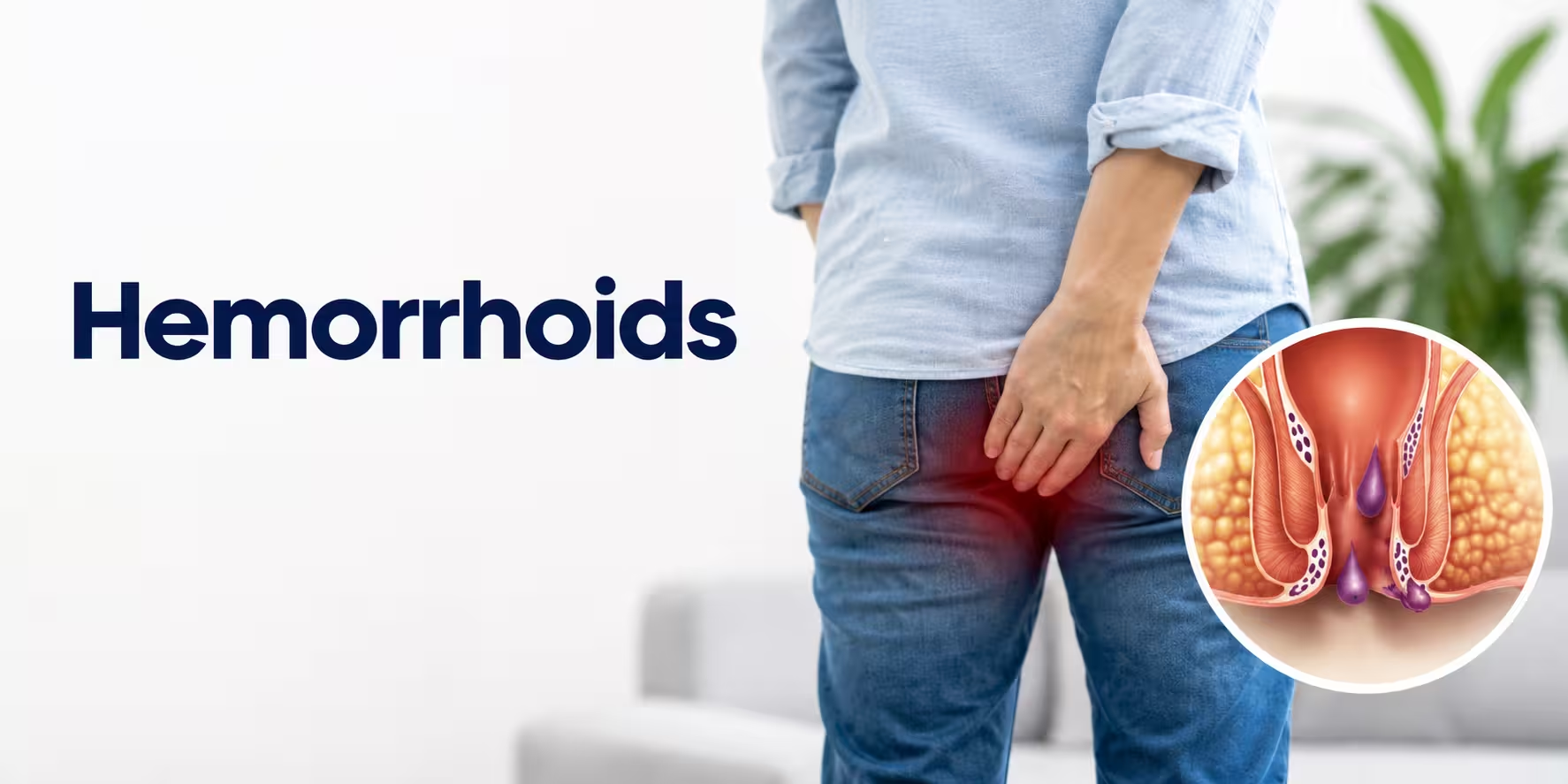
Hemorrhoids (piles) are swollen blood vessels that develop inside or around the anus and lower rectum. They form when the small cushions of tissue that normally help control bowel movements become engorged, usually due to straining, constipation, pregnancy, obesity or the natural effects of ageing. Around half of adults in the UK will experience piles at some point, most often from their mid-40s onwards. Most cases settle within a few days to weeks with dietary changes and pharmacy treatments; persistent or larger piles may need a short procedure such as banding.
Many patients picture something alarming when they first notice symptoms, but hemorrhoids are, in essence, an exaggerated version of tissue that’s present in everyone. The anal canal has a natural network of blood vessels - sometimes called anal cushions - that help maintain continence. When these become swollen and stretched under pressure, they form what we call a pile.
Internal piles develop higher up, inside the lower rectum, above the point where pain-sensing nerves are found. Because of this, they’re often:
External piles form nearer the surface, around the anal opening, where nerve endings are more sensitive. They tend to be:
Doctors grade internal piles from 1 to 4, depending on their size and whether they prolapse:
One of the most common concerns I see in practice is a patient who has felt a lump and assumed the worst. A delivery driver in his 50s came to see me convinced he’d found something sinister after a long shift; examination confirmed a small external pile, entirely consistent with prolonged sitting and occasional straining linked to a low-fibre diet on the road. Understanding the grading helps take some of the mystery - and anxiety- out of a diagnosis.
There’s no single cause of hemorrhoids - they develop when pressure repeatedly builds in the veins around the anus. Common contributing factors include:
A question I am frequently asked is why hemorrhoids seem to appear “out of nowhere” after years of no problems. In most cases it isn’t sudden at all - it reflects a gradual build-up of pressure, often from constipation that’s gone unaddressed, or weight gain over several years. For patients whose weight is a significant contributing factor, structured support through a weight management programme can meaningfully reduce pressure on the pelvic floor and lower the chance of piles recurring.
Typical symptoms include:
Many patients are surprised to learn that hemorrhoids often cause no symptoms at all, and are only discovered incidentally during an examination for something else entirely.
Rectal bleeding is, by far, the symptom that brings people into my clinic fastest- and rightly so. The overwhelming majority of rectal bleeding is caused by hemorrhoids. But because bleeding is also a recognised symptom of bowel (colorectal) cancer, it should never be assumed to be piles without an examination, particularly if it’s a new symptom or you’re over 50. Cancer Research UK sets out the wider range of bowel cancer symptoms worth knowing about.
Features that warrant a prompt GP assessment include:
One of the most common concerns I see in practice is a patient reluctant to be examined “just for piles,” worried about wasting a GP’s time. It’s never a waste of time — ruling out other causes is exactly why the examination matters. If bleeding has been ongoing for some time, a private blood test can also check for iron-deficiency anaemia, which sometimes develops quietly when hemorrhoid bleeding goes unnoticed over several weeks.
While hemorrhoids affect men and women in roughly similar numbers overall, several factors make them particularly common in women:
Piles in pregnancy don’t just happen to first-time mothers, and they don’t always resolve immediately after birth, though most improve within weeks. NHS guidance on piles in pregnancy is worth reading, and it’s always worth checking with a midwife, doctor or pharmacist before starting any cream, since not every over-the-counter product is suitable in pregnancy.
Many patients are surprised to learn that other conditions can look remarkably similar to piles, particularly anal itching linked to thrush, skin conditions, or anal fissures (small tears in the lining of the anus, which tend to cause sharp pain during and after a bowel movement rather than the dull ache typical of piles). Because symptoms like discharge or unusual itching can occasionally point to something else entirely, sexual health testing alongside a standard examination can help rule out other causes when the picture isn’t textbook.
Diagnosing piles is usually straightforward and doesn’t require any special preparation. A typical assessment involves:
If there’s any uncertainty, or red-flag symptoms are present, a doctor may arrange further tests such as a proctoscopy (a short tube used to look directly at the lower rectum) or refer you to a colorectal specialist for a colonoscopy.
I know how off-putting this examination sounds to people who’ve never had one - but it takes moments, and every GP has done thousands of them. Being able to arrange a same-day private GP appointment allows this to be examined and explained clearly, usually within a single visit, without the wait that can come with routine booking. For patients who’d rather address it alongside a wider review of their health, a full health assessment can screen for related issues such as anaemia and blood pressure at the same time.
The right treatment depends on the grade of the piles and how much they’re affecting day-to-day life. Most people never need anything beyond the first two categories below.
When piles don’t settle with the measures above, or are large enough to prolapse, a range of outpatient and surgical options can help:
Most procedures for hemorrhoids are done as day cases, and many people return to normal activities within a few days. Surgery is reserved for a minority of cases - typically grade 3 and 4 piles, or those that haven’t responded to simpler treatments.
Book an appointment if:
There’s genuinely no need to feel embarrassed. Every GP examines patients for piles regularly, and for many people, the anxiety of “not knowing” causes more distress than the physical symptoms themselves. Where ongoing worry about symptoms is affecting sleep, mood or daily life, confidential mental health support is also available alongside physical treatment — it’s a legitimate part of getting the full picture, not a separate issue.
Yes. “Hemorrhoids” and “piles” describe the same condition — swollen blood vessels in or around the anus. “Piles” is simply the more commonly used term in everyday UK conversation.
Small, grade 1 piles often settle on their own within a few days, particularly with dietary changes. Larger or persistent piles are less likely to resolve without treatment.
Internal piles are often painless and may only be noticed as bleeding. External piles can feel like a tender, soft lump, and may itch or ache, particularly after a bowel movement.
Bleeding from piles is rarely dangerous on its own, but any new or ongoing rectal bleeding should be checked by a doctor to rule out other causes, particularly if you’re over 50 or the bleeding pattern changes.
Hemorrhoids themselves are not cancerous and do not turn into cancer. However, because bowel cancer can also cause rectal bleeding, any bleeding should be assessed rather than assumed to be piles.
Most mild piles improve within a few days to a couple of weeks with self-care. Larger piles, or those requiring a procedure, may take a few weeks to fully settle.
Small, grade 3 piles can sometimes be gently pushed back in. Larger, grade 4 piles are permanently prolapsed and shouldn’t be forced back in — these need medical assessment.
Piles themselves don’t have a smell, though they can make it harder to clean the area thoroughly after a bowel movement, which may cause odour if any stool is left behind.
There’s no specific food that causes piles, but a low-fibre diet and inadequate fluid intake make constipation, and therefore piles, more likely. Increasing fibre-rich foods and fluids is more useful than avoiding any particular food.
Yes. Piles are very common in pregnancy, particularly in the third trimester, due to hormonal changes and increased pressure from the growing uterus. They usually improve after birth, though this can take a few weeks.
Same Day Online Booking
No Time Limits Appointments
Online Consultations Available
Latest Blog Posts
Adult Asthma Explained: Symptoms, Silent Attacks, Causes, Testing, and Late-Onset Diagnosis
Endometriosis: Symptoms, Causes, Treatment
Rheumatoid Arthritis - Symptoms, Causes, Treatment

Non-Allergic Rhinitis: Symptoms, Triggers, and How It Differs From Hay Fever

Understanding ADHD: Symptoms, Treatments, and the Value of Private GP Services

Defeat Hay Fever: Understanding and Managing Symptoms in the UK
Ready to take the next step?

