
Written by Dr. Simon Khela MBChB MRCGP, GMC Registered Doctor
Last reviewed: 19-08-2026
_________________________________________________________________________
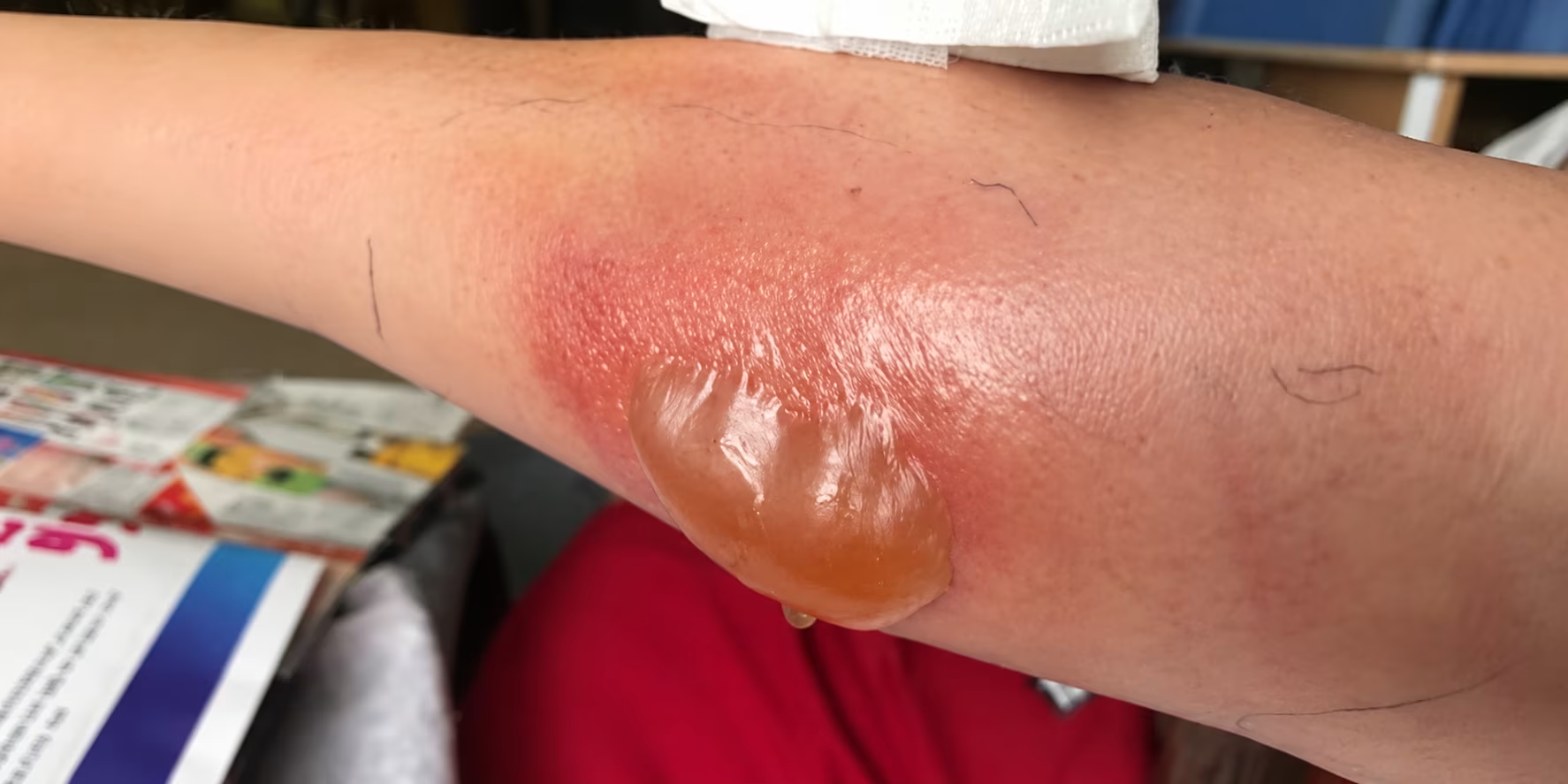
A horsefly bite can be more painful and noticeable than many other common insect bites. Unlike mosquitoes, horseflies cut the skin rather than simply piercing it, which is why the bite often causes immediate pain, bleeding, redness, and swelling.
Horseflies are one of several biting insects that become more noticeable during the warmer months, when people spend more time outdoors, and they've had a reasonable amount of attention this summer alongside mosquitoes, midges, and ticks. Most horsefly bites can be managed at home, but it's important to recognise when a bite is becoming infected or causing a serious allergic reaction.
This guide explains horsefly bite symptoms, how to treat a horsefly bite, how long it may take to heal, how to recognise an infected bite, and when to seek medical help in the UK.
If you have been bitten by a horsefly:
Horseflies are one of several biting insects that become more noticeable during the warmer months, when people spend more time outdoors.
There is also evidence from UK health surveillance that insect-bite activity responds to changes in weather and seasonal conditions.
During the week of 6–12 July 2026, NHS 111 contacts for insect bites increased, while GP consultation rates for insect bites were also above expected seasonal levels.
However, the picture changed later in July. During 20–27 July 2026, NHS 111 insect-bite contacts decreased and returned to around seasonally expected levels, although GP consultations for insect bites remained above expected levels.
This is important because it would be misleading to describe the current situation simply as a “horsefly bite surge”. The official data covers insect bites generally rather than horsefly bites specifically.
What it does show is that insect bites remain a relevant summer health issue in the UK.
Recent UK coverage has also highlighted horseflies alongside mosquitoes, midges and ticks as common summer biting insects. Entomology experts explained that horseflies are particularly painful because they slice the skin and feed from the resulting blood flow, rather than using the needle-like feeding mechanism associated with mosquitoes.
Horsefly bites feel different from many mosquito bites because of how the insect feeds. Rather than simply inserting a fine mouthpart into the skin, a female horsefly uses mouthparts that cut the skin and then feeds on the blood that flows to the surface.
This physical injury is why the bite can cause:
UK entomologists interviewed for The Guardian's 2026 summer insect-bite coverage describe this cutting-and-feeding process as physically damaging to the skin, which helps explain why horsefly bites can be considerably more painful than mosquito bites, and why different species are reported to target different parts of the body.
A horsefly bite may appear as:
The appearance alone doesn't always tell you whether a bite is infected. The more useful question is:
A bite that is gradually settling is generally reassuring. A bite that becomes increasingly painful, hot, swollen, or red needs closer attention - the direction of change matters more than how dramatic the bite looks on day one.
If you're unsure what has bitten you, particularly if the reaction is unusual or worsening, it's better not to rely solely on appearance. Horsefly bites are often confused with flea bites, mosquito bites, and tick bites, though each tends to follow a slightly different pattern:
Flea bites, by contrast, tend to appear as small, itchy bumps clustered around the ankles and lower legs rather than as a single large, painful wound - a useful distinction if several small bites have appeared overnight rather than one obvious bite.
For most people, a horsefly bite is uncomfortable rather than dangerous. The main things to watch for are:
Pain, redness, itching, and swelling can occur after the bite - this is the most common outcome and generally settles on its own.
Horsefly bites break the skin, creating an opportunity for bacteria to enter. The NHS specifically warns that horsefly bites often become infected.
This is uncommon but requires emergency treatment if symptoms such as breathing difficulty or sudden swelling of the mouth or throat develop. If you've had a strong or unexpected reaction to an insect bite before, allergy testing can help clarify what you're dealing with, rather than waiting to find out during the next bite.
This is one of the most important distinctions to understand. A large bite does not automatically mean it is infected. The NHS advises seeking pharmacy advice where the surrounding skin is hot or red, the bite is painful or swollen, or pus or fluid is coming from it.
A useful rule of thumb: a dramatic bite is not necessarily an infected bite, but a progressively worsening bite deserves attention.
Most uncomplicated insect bites can be treated without seeing a GP. NHS guidance recommends several simple measures:
Wash the area with soap and water. This helps reduce the chance of infection.
Use an ice pack wrapped in a cloth, or a clean cloth soaked in cold water, for at least 20 minutes if the area is swollen.
Scratching can damage the skin further and increase the risk of infection.
An antihistamine may help with itching, while hydrocortisone cream may reduce itching and swelling when appropriate. A pharmacist can advise which treatment suits you.
Paracetamol or ibuprofen can be used for pain where appropriate and according to the product instructions.
There are many home remedies suggested online for insect bites, including bicarbonate of soda and other household preparations. The NHS specifically advises against using home remedies such as bicarbonate of soda for insect bites and stings. For a horsefly bite, keeping the wound clean and using established treatments for pain, swelling, and itching is a safer approach.
Not every horsefly bite needs antibiotics. Antibiotics are used when a bacterial infection has developed, and treatment is considered appropriate by a healthcare professional. Possible signs include:
The NHS advises people with hot, red, painful or swollen insect bites, or bites producing pus or fluid, to seek advice from a pharmacist. Pharmacists can recommend treatment and, where appropriate, provide antibiotics for an infected insect bite.
Consider medical assessment if:
A pharmacist is often an appropriate first point of contact for an uncomplicated but potentially infected bite. If symptoms are more concerning, a private GP appointment allows the bite to be properly assessed. For bites that keep recurring, or where the reaction seems disproportionate to what's actually happened, a referral to a specialist can help investigate further. Where a quick check on how a bite is healing is all that's needed, an online GP consultation can often save an unnecessary trip in.
Call 999 or go to A&E immediately if you develop symptoms of a serious allergic reaction, including:
These symptoms can indicate a serious allergic reaction requiring immediate treatment.
Most uncomplicated insect bites improve within a few days, although the exact recovery time varies depending on the individual and the severity of the local reaction. A horsefly bite can remain sore, swollen or itchy for several days. As before, the direction of change is what matters:
Most horsefly bites cause a local reaction rather than significant illness, but feeling generally unwell alongside a worsening bite - particularly with fever, spreading redness, increasing pain or pus - is a reason to seek medical advice.
Choose:
Horseflies are attracted to movement, heat and larger visual targets, and lighter, less uniform patterns may make people somewhat less obvious to some biting flies.
Repellents containing recognised active ingredients such as DEET or picaridin can help reduce insect bites. Always follow the product instructions, particularly when using repellents on children.
Horseflies are particularly relevant when spending time:
NHS England's summer 2026 advice recommends being prepared for common summer problems including insect bites and stings. It specifically suggests having appropriate over-the-counter medicines, antihistamines, a first-aid kit and an ice pack available at home.
For families travelling within the UK, having these basics available can make managing a minor horsefly bite considerably easier.
If the bite becomes infected or symptoms worsen, seek appropriate medical advice rather than continuing home treatment indefinitely.
Most horsefly bites cause a local reaction rather than significant illness.
However, feeling generally unwell alongside a worsening bite can be a reason to seek medical advice, particularly if you also develop a fever, spreading redness, increasing pain or pus.
Severe symptoms such as difficulty breathing, throat swelling, severe dizziness or collapse require emergency treatment.
Most horsefly bites settlewithin a week to ten days with basic first aid. Some swelling and itching inthe first few days is normal and doesn't necessarily mean anything is wrong.
Horseflies cut the skin withblade-like mouthparts to feed on blood, rather than piercing it with a fineneedle-like proboscis the way mosquitoes do, which is why the initial pain issharper and more immediate.
It's uncommon, but a bite canbecome infected, leading to cellulitis, or in rare cases trigger a significantallergic reaction. Both are treatable, particularly if caught early, which iswhy watching for changes over the following days matters.
No. Squeezing or popping thebite increases the risk of introducing bacteria and can delay healing ratherthan speed it up.
Hydrocortisone cream can helpwith itching once the skin isn't broken, and antihistamine tablets aregenerally more effective than antihistamine creams for reducing swelling anditch.
Look for redness or swellingthat's increasing rather than settling after 48 hours, warmth, pus, or a fever.A bite that's simply still red and a bit swollen after a day or two is usuallya normal reaction, not infection.
Unlike ticks, horseflies aren'testablished carriers of serious disease in the UK. The main risks are secondarybacterial infection and, less commonly, an allergic reaction.
Children can have larger localswellings than adults and may scratch the area more, increasing infection risk,but serious allergic reactions are no more common in children than adults. Anychild who seems unusually unwell alongside a bite should be assessed promptly.
Go to A&E or call 999immediately if there’s swelling of the lips, tongue, throat or face, difficultybreathing, dizziness, or widespread hives, as these suggest a serious allergicreaction rather than a normal local response.
Yes, allergic reactions candevelop or worsen after repeated exposure, so a bigger or more severe reactionthan usual is worth discussing with a GP, even if previous bites wereunremarkable.
Same Day Online Booking
No Time Limits Appointments
Online Consultations Available
Latest Blog Posts
Adult Asthma Explained: Symptoms, Silent Attacks, Causes, Testing, and Late-Onset Diagnosis
Endometriosis: Symptoms, Causes, Treatment
Rheumatoid Arthritis - Symptoms, Causes, Treatment
Non-Allergic Rhinitis: Symptoms, Triggers, and How It Differs From Hay Fever

Understanding ADHD: Symptoms, Treatments, and the Value of Private GP Services

Defeat Hay Fever: Understanding and Managing Symptoms in the UK
Ready to take the next step?

