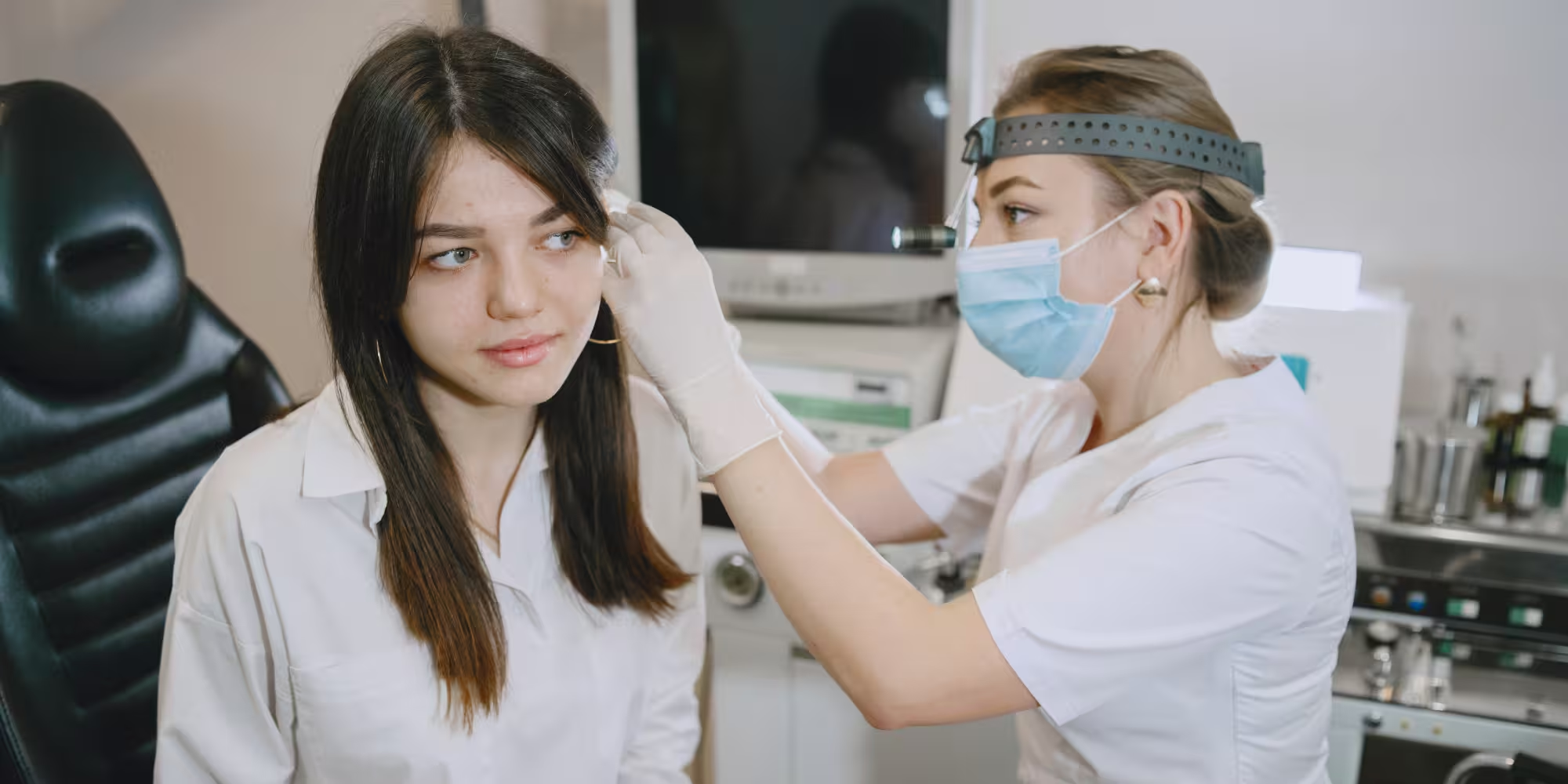
Private Cervical Smear Tests: Cost, Process and How Often You Need One

Private Cervical Smear Tests: Cost, Process and How Often You Need One

Written by Dr. Simon Khela MBChB MRCGP, GMC Registered Doctor

_________________________________________________________________________

Cervical screening, still widely known as a smear test, is one of the most effective cancer prevention tools we have, yet it's also one of the appointments patients most often put off. In clinic, the questions I hear aren't usually about whether screening matters; most people already know it does. They're far more practical: how much does it cost to have one done privately, what actually happens during the appointment, and how often do I genuinely need one, given the guidance seems to have changed?

That last question is a fair one. The NHS screening schedule has genuinely shifted in recent years, and a fair amount of information still in circulation, including on some clinic websites, hasn't caught up. This article sets out where things currently stand, what a private test involves, and what it's likely to cost, without any of the vagueness that usually surrounds pricing in this area.

Quick Answer: Cost, Process and Frequency

For readers who want the headline figures first:

  • Cost: a standalone private cervical smear test in the UK typically costs somewhere in the region of £150 to £350, depending on the clinic, location, and whether a consultation and HPV typing are included. Comprehensive women's health packages that bundle in additional tests can cost more.
  • Process: a speculum is used to see the cervix, a small brush collects a sample of cells, and the sample is tested first for high-risk HPV; cytology (looking at the cells themselves) is only carried out if HPV is found. The appointment itself usually takes under 15 minutes.
  • Frequency: in England, Wales and Scotland, routine screening now runs every 5 years for everyone aged 25 to 64 who tests HPV negative, following a change in England from July 2025. Northern Ireland still screens every 3 years between 25 and 49. More frequent follow-up is offered if HPV is detected.

What Is a Cervical Smear Test?

A cervical smear test, more formally called cervical screening, checks the health of the cervix and looks for early warning signs that could, if left untreated, develop into cervical cancer. It's important to be clear about what it isn't: it's not a test that diagnoses cancer itself, but a screening tool designed to catch changes years before cancer could develop. According to the NHS, the test primarily looks for high-risk strains of human papillomavirus (HPV), the virus responsible for almost all cervical cancers.

Modern screening, whether NHS or private, uses what's called primary HPV testing. The sample is tested for HPV first. If no high-risk HPV is found, no further action is needed and cytology isn't performed, because the risk of abnormal cells developing without HPV present is very low. If HPV is found, the same sample is then examined under a microscope (cytology) to check for any changes to the cells themselves.

It's also worth being clear that screening isn't only relevant to women in the traditional sense. Anyone with a cervix, including trans men and non-binary people who haven't had a hysterectomy, is eligible and should be invited, though in practice many people in this group are under-screened, often because standard invitation systems and language don't always reach them effectively. If you have a cervix and aren't sure whether you're on a screening register, it's worth raising this directly with a GP rather than assuming you'll be automatically included.

How Often Do You Actually Need One?

This is where a lot of outdated information is still floating around, including, ironically, on some private clinic websites. As of an NHS England update from June 2025, the screening interval changed significantly:

  • England: everyone aged 25 to 64 who tests HPV negative is now invited every 5 years, a change from the previous 3-yearly interval for those aged 25 to 49, which took effect from July 2025.
  • Wales and Scotland: already screening everyone aged 25 to 64 every 5 years, ahead of England's change.
  • Northern Ireland: still runs a 3-yearly interval for ages 25 to 49, moving to 5-yearly from 50 to 64.
  • If HPV is detected: you'll be invited back sooner, typically within 12 months, to check whether the virus has cleared, rather than waiting for your next routine interval.

It's worth adding that this isn't just a policy change for the sake of it. As Cancer Research UK sets out, the evidence behind the extended interval comes from large studies showing that 5-yearly screening is essentially as safe as 3-yearly screening when HPV testing is used as the primary method, because a negative HPV result predicts very low risk over the following five years.

NHS vs Private Screening: What's the Difference?

The test itself, and the underlying science, is identical whether you're screened on the NHS or privately. What differs is access and convenience:

  • Timing: private testing isn't tied to your NHS call and recall schedule, so it suits people who've missed an invitation, want reassurance sooner than their next due date, or are under 25 and outside the routine NHS age range.
  • Speed of results: NHS results typically take around 2 weeks; private results are often available within a few working days.
  • Choice of clinician: private clinics can usually offer a female clinician on request more reliably than some NHS surgeries, which matters to a lot of patients.
  • Setting: private appointments tend to allow more time and a less rushed environment, which some patients find makes an inherently uncomfortable test easier to get through.

None of this makes private screening clinically “better” than NHS screening. The laboratory analysis, the HPV test itself, and the clinical thresholds for follow-up are the same. What you're paying for is flexibility and speed, not a more accurate test.

How Much Does a Private Smear Test Cost?

Prices vary considerably across the UK private healthcare market, and vagueness around cost is one of the most common frustrations patients raise with me. As a general guide, based on current UK market rates:

  • A standalone smear test (HPV primary screening, with reflex cytology if needed), including a consultation, typically costs somewhere between £150 and £350.
  • Add-ons such as extended HPV genotyping, a chaperone, or same-day results can increase the price.
  • Comprehensive well-woman health checks that bundle a smear test with pelvic examination, blood tests and other screening can run considerably higher, sometimes several hundred pounds more, depending on what's included.

Because pricing structures vary so much between providers, and because some include the consultation while others charge for it separately, the only reliable way to know what you'll actually pay is to ask for a clear, itemised quote before booking, rather than relying on a headline price alone.

Part of what drives the price range is who actually carries out the test. Some clinics use a practice nurse trained specifically in cervical sampling, others use a GP, and some use a gynaecologist, particularly for patients with a complex history. All three are entirely capable of performing the test competently, and a higher price doesn't necessarily mean a better-quality sample; it more often reflects consultation length, clinic location, and whether follow-up care is bundled in.

What Happens During the Test?

Understanding the process in advance genuinely seems to reduce anxiety for most patients. Here's what to expect:

  • You'll usually have a brief consultation first, covering your medical history, last menstrual period, and any symptoms.
  • You'll be asked to undress from the waist down and lie on an examination couch, usually with a modesty sheet provided.
  • A speculum, a smooth instrument that gently holds the vaginal walls apart, is inserted so the cervix can be seen clearly.
  • A small, soft brush is used to collect a sample of cells from the surface of the cervix; this takes a matter of seconds.
  • The sample is sent to a laboratory, where it's tested for high-risk HPV, with cytology performed only if HPV is detected.

The whole appointment, including consultation, usually takes 10 to 15 minutes, with the sample collection itself lasting well under a minute. Most patients describe it as uncomfortable rather than painful, though this varies between individuals.

Understanding Your Results

Results pathways are broadly standardised across NHS and private providers:

  • HPV negative: no further action needed until your next routine screening is due.
  • HPV positive, no abnormal cells: usually rechecked in around 12 months to see whether the virus has cleared on its own, which it very often does.
  • HPV positive with abnormal cells: referral for colposcopy, a more detailed examination of the cervix, to assess whether any treatment is needed.
  • Inadequate sample: occasionally the sample can't be properly analysed, in which case you'll be asked to repeat the test after a short interval.

It's worth emphasising that an abnormal result is not a cancer diagnosis. Cell changes found through screening are, in the vast majority of cases, treatable at a very early, pre-cancerous stage, which is precisely the point of the programme.

Preparing for Your Test

A few simple steps make the test more comfortable and more likely to give a clear result the first time:

  • Try to book mid-cycle, avoiding your period if possible, as blood can interfere with sample analysis.
  • Avoid sex, vaginal creams, lubricants or douching for at least 24 hours beforehand.
  • If you've recently been treated for a vaginal infection, wait around 7 days after finishing treatment before testing.
  • Bring details of any previous smear or colposcopy results if you have them, as this helps your clinician interpret your current result in context.

Who Should Consider Private Testing Outside the NHS Schedule?

A private test can be a reasonable option, rather than a purely elective luxury, in several situations:

  • You've missed an NHS invitation and don't want to wait for the next recall cycle.
  • You're under 25 with symptoms such as bleeding after sex or between periods, which warrant assessment regardless of the routine screening age.
  • You've previously had HPV or abnormal cells and want reassurance sooner than your NHS follow-up date.
  • You're not registered with a GP, for example if you're new to the UK or between registrations.

If your smear test does lead to a colposcopy referral or reveals something that needs broader medical follow-up, that's a reasonable time to book a private GP appointment to make sure everything is coordinated and nothing falls through the gaps between appointments.

If you're not sure whether your situation warrants private testing or whether you should simply wait for your NHS invitation, that's a reasonable thing to raise during an online GP consultation before booking anything.

Common Myths and Misconceptions

  • “A smear test checks for cancer.” It doesn't directly; it checks for HPV and cell changes that could develop into cancer if left untreated, catching problems years before that point.
  • “I've had the HPV vaccine, so I don't need screening.” The vaccine protects against the HPV types responsible for most cervical cancers, but not all of them, so screening is still recommended for vaccinated people.
  • “Only sexually active people need screening.” HPV is extremely common and can be picked up from any skin-to-skin genital contact, not only penetrative sex, and can also lie dormant for years, which is one reason it's often discussed alongside broader sexual health testing, rather than screening applying only to people who consider themselves at high risk.
  • “I can stop screening after menopause.” Cervical cancer risk doesn't disappear at menopause, and screening continues to be recommended up to age 64, or later in some circumstances.
  • “If it was fine last time, I don't need to keep going.” A previous normal result doesn't remove the value of future screening, since HPV can be acquired or reactivate at any point.

Frequently Asked Questions about Cervical Smear Test

How much does a private smear test cost in the UK?

Most standalone private cervical smear tests cost between £150 and £350, depending on the clinic, location, and whether a consultation and HPV typing are included. Comprehensive well-woman packages can cost more.

How often should I have a cervical smear test?

In England, Wales and Scotland, routine screening is now every 5 years for ages 25 to 64 if you test HPV negative, following a change in England from July 2025. Northern Ireland still screens every 3 years for ages 25 to 49.

Can I get a private smear test if I'm under 25?

Yes. The NHS doesn't routinely screen under-25s because cell changes at this age usually resolve on their own, but private testing is available if you have symptoms or specific concerns, and your clinician will discuss whether it's appropriate.

Do I still need a smear test if I've had the HPV vaccine?

Yes. The vaccine protects against the HPV types responsible for most, but not all, cervical cancers, so regular screening is still recommended even after vaccination.

Is a smear test painful?

Most people describe it as uncomfortable rather than painful. It usually takes only a few seconds to collect the sample, and telling your clinician if you're anxious can help them adjust the approach.

How long do private smear test results take?

Private results are often available within a few working days, compared with around 2 weeks for NHS results, though this varies by lab and provider.

What happens if my result is abnormal?

An abnormal result isn't a cancer diagnosis. Depending on the finding, you may be asked to repeat the test sooner, or referred for a colposcopy, a closer examination of the cervix, to check whether any treatment is needed.

Can I have a smear test during my period?

It's best avoided if possible, since blood can interfere with how well the sample can be analysed. Booking mid-cycle generally gives the clearest result.

Do I need a smear test after menopause?

Yes, cervical cancer risk doesn't disappear at menopause, and screening is recommended up to age 64, sometimes later depending on your screening history.

What's the difference between a smear test and an HPV test?

Modern cervical screening uses HPV testing as the first step on the same sample; cytology, the traditional “smear” examination of the cells, is only carried out afterwards if HPV is found. In practice, “smear test” and “cervical screening” now refer to this same combined process.

Same Day Online Booking

Book your consultation online with our easy online booking form.

No Time Limits Appointments

Confidential same-day consultations with no time limits. Discuss your health concerns with an experienced doctor in a private and relaxing space.

Online Consultations Available

Same-day telephone or video consultations provide instant access to doctors. Prescriptions, medical certificates, referral letters & sick notes are available.

Latest Blog Posts

When Should You Worry About a Headache? A Certified GP Explains
Private GP

When Should You Actually Worry About a Headache? A Certified GP Explains

Which headache symptoms genuinely warrant urgent attention, which are worth a routine GP conversation, and which are simply part of being human. Given how much this genuinely matters
Earwax Removal: Microsuction vs Ear Syringing : Which Is Better?
Private GP

Earwax Removal: Microsuction vs Ear Syringing : Which Is Better?

Earwax build-up is one of those everyday complaints that can feel disproportionately frustrating, simply because hearing clearly is something we take for granted until it's gone.
A lot of white pills in the hands of an adult man
Health

Cetirizine vs Loratadine vs Fexofenadine: Which Antihistamine Actually Works Best?

If you're in the aisle of your pharmacy wondering which one to pick, cetirizine, loratadine, and fexofenadine options, you're not all on your own.
Young handsome physician in a medical robe with stethoscope
Health

A Complete Guide to HGV Driver Medical Requirements in the UK

Driving a heavy goods vehicle (HGV) is a serious responsibility — it requires good health, focus, and physical ability.
Eli Lilly and Company World Headquarters
News

New Weight-Loss Pill (Orforglipron) Expected in the UK by 2026

The landscape of medical weight loss is about to change again. Eli Lilly, the pharmaceutical company behind the highly successful Mounjaro (tirzepatide), has announced that its new once-daily oral medication — Orforglipron
Dermot Murnaghan
News

Ex-Sky Presenter Urges Men to 'Demand' Prostate Cancer Test After Stage-Four Diagnosis

Former Sky News presenter Dermot Murnaghan has publicly urged men to demand prostate cancer screening after revealing his own stage-four diagnosis.

Ready to take the next step?

Whether you're seeking advice or ready to book a consultation, we’re here to help. Explore our services or connect with a care professional today.