
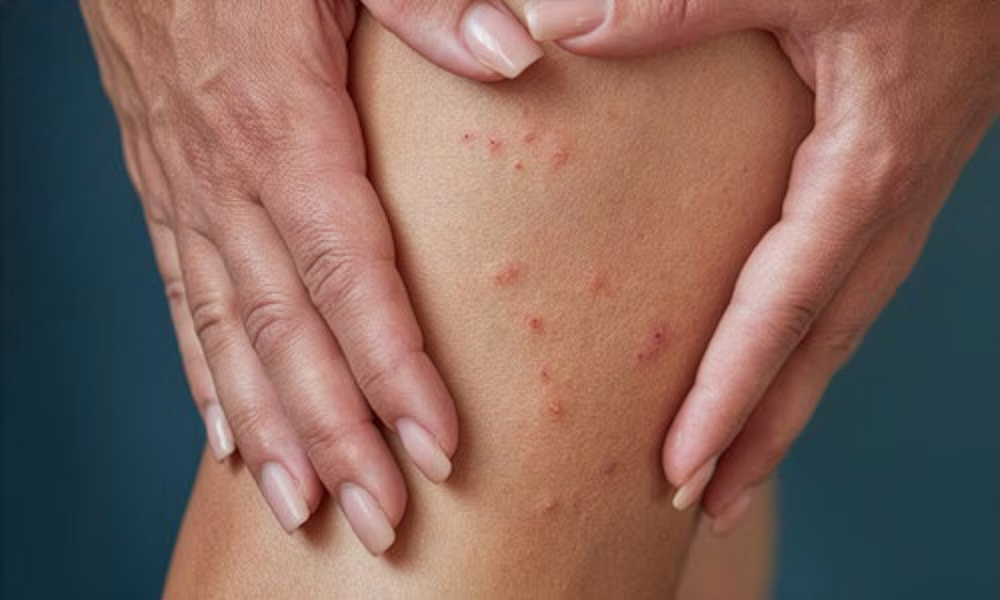
Scabies is a highly contagious skin condition caused by the microscopic Sarcoptes scabiei mite. These mites burrow into the skin, leading to intense itching, irritation, and a distinctive rash. Although common, scabies should never be ignored — early diagnosis and treatment help prevent complications and stop the infection spreading to others.
Scabies develops when female mites burrow into the upper layers of the skin to lay eggs. The body reacts to the mites, their eggs, and their waste — causing:
Scabies is not related to poor hygiene. Anyone can catch it — including children, adults, and the elderly — regardless of lifestyle or cleanliness.
The only direct cause of scabies is infestation with the Sarcoptes scabiei mite. These mites thrive in warm areas of the body and reproduce within the skin.
These can carry mites for up to 2–3 days.
Most people notice symptoms 2–6 weeks after first exposure — but in people who have had scabies before, symptoms can appear within a few days.
In infants and elderly patients, the face, scalp, palms, and soles can also be affected.
You can contract scabies through:
Because symptoms take weeks to appear, a person may pass scabies on before they realise they’re infected.
Yes — to prevent spreading the infection.
Everyone in the household and close physical contacts should be treated at the same time to prevent reinfection.
Scabies can often be diagnosed through a clinical examination by an experienced GP or dermatologist. Your healthcare professional will ask about your symptoms, when they started, whether you've had close contact with someone who has scabies, and whether other members of your household are experiencing similar symptoms.
During the examination, your doctor will carefully inspect your skin for the characteristic signs of scabies, including the rash, burrows and areas of persistent scratching. The distribution of the rash, particularly between the fingers, around the wrists, elbows, waistline and genitals, can provide important clues to the diagnosis.
In many cases, scabies can be diagnosed based on your symptoms and the appearance of your skin alone. Common features that suggest scabies include:
Your doctor will also consider other skin conditions that can cause similar symptoms, such as eczema, dermatitis, insect bites or allergic skin reactions.
If the diagnosis is uncertain, your clinician may use a dermoscope a handheld device that magnifies the skin and provides a clearer view of the surface. Dermoscopy can sometimes reveal the tiny scabies mite or its burrow, helping to confirm the diagnosis without the need for invasive testing.
In some cases, particularly if the diagnosis is unclear or symptoms persist despite treatment, your doctor may perform a skin scraping. This involves gently removing a small sample of skin from a suspected burrow and examining it under a microscope to look for scabies mites, eggs or mite droppings (faeces).
The procedure is quick, causes minimal discomfort and is not required for most people with typical scabies.
There is no reliable home test for scabies. Although the rash and itching may suggest the condition, several other skin disorders can produce similar symptoms. Attempting to self-diagnose may delay appropriate treatment or lead to unnecessary use of medication.
If you develop persistent itching, especially if it is worse at night or other members of your household have similar symptoms, it's important to seek medical advice for an accurate diagnosis and prompt treatment.
Scabies requires prescription treatment — it will not clear with home remedies.
Creams such as Permethrin 5% are applied from the neck down and left on for 8–12 hours.
Given in cases of severe, crusted, or persistent scabies.
Even after successful treatment, itching may continue for 2–4 weeks due to the body’s allergic reaction. Relief options include:
Even if they have no symptoms — this is essential to avoid reinfestation.
Scabies remains contagious until treatment has been completed. After starting the correct medication, people are usually no longer contagious within 24–48 hours, although itching may continue longer.
You should see a private GP or dermatologist if:
If untreated, scabies can lead to:
Early diagnosis prevents these complications.
Scabies can be distressing, uncomfortable, and easily spread — but early treatment stops it quickly.
At Private Medical Clinic, we offer:
Your health doesn’t need to wait — and neither should your treatment. Book your scabies consultation today.
Yes. Scabies is fully curable with the correct prescription treatment. The most common first-line therapy is Permethrin 5% cream, which kills the mites and their eggs when applied properly. In some cases—such as severe, crusted, or persistent scabies—oral Ivermectin may be prescribed.
Even after successful treatment, itching may continue for 2–4 weeks due to the body’s allergic reaction to the mites, but this does not mean the infection is still active. To ensure complete cure, all close contacts must be treated at the same time and all hygiene steps must be followed.
Yes. Scabies mites can survive away from the human body for up to 72 hours. During this time, bedding, clothing, and towels can remain contagious.
To prevent reinfestation:
These steps help ensure mites and eggs are completely destroyed.
Yes — scabies spreads very easily and often before symptoms appear. It is most commonly transmitted through prolonged skin-to-skin contact, such as between family members, partners, or people living in shared accommodation.
Because symptoms may take 2–6 weeks to appear after the first infection, a person may unknowingly pass scabies on to others.
Even individuals without symptoms must be treated to stop the infection cycle.
Scabies can be spread through sexual contact, as prolonged close skin contact makes transmission more likely.
However, scabies is not classified as a sexually transmitted infection (STI). It can be passed between any individuals in close physical contact — including family members or children — not just sexual partners.
Same Day Online Booking
No Time Limits Appointments
Online Consultations Available
Latest Blog Posts
Adult Asthma Explained: Symptoms, Silent Attacks, Causes, Testing, and Late-Onset Diagnosis
Endometriosis: Symptoms, Causes, Treatment
Rheumatoid Arthritis - Symptoms, Causes, Treatment

Non-Allergic Rhinitis: Symptoms, Triggers, and How It Differs From Hay Fever

Understanding ADHD: Symptoms, Treatments, and the Value of Private GP Services

Defeat Hay Fever: Understanding and Managing Symptoms in the UK
Ready to take the next step?

