

Everything you need to know about using Mounjaro (tirzepatide) for weight loss: injection sites, step-by-step technique, storage, and managing side effects — from our expert clinical team.
Mounjaro is a clinically proven, once-weekly weight loss injection available in the UK through private prescription. Its active ingredient, tirzepatide, works by mimicking two gut hormones — GIP and GLP-1 — that regulate appetite and blood sugar. This dual action suppresses hunger, slows gastric emptying, and makes it significantly easier to maintain a reduced-calorie diet.
Clinical research has demonstrated that tirzepatide at the highest maintenance dose of 15mg per week can help patients lose up to 22.5% of their initial body weight over 72 weeks, making Mounjaro one of the most effective medical weight loss treatments currently available in the UK.
At Private Medical Clinic, our experienced clinicians provide tailored Mounjaro prescriptions and ongoing support to help you achieve sustainable, long-term results.
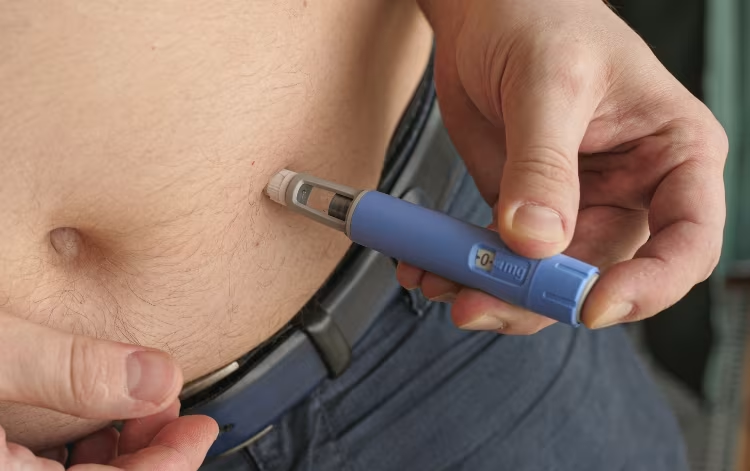
Before you administer your Mounjaro injection, you need to select an appropriate injection site. Mounjaro is given as a subcutaneous injection — meaning it is injected just beneath the skin — and can be administered in three areas of the body:
You may inject in the same body area each week, but you must rotate to a different section of skin within that area. Alternatively, cycle between all three areas week by week to give each site adequate time to recover.
If you are self-injecting, the abdomen and upper thighs are the most accessible and recommended sites. If a family member or carer is assisting you, the upper arm is also an excellent option.
Important rotation rules - Divide each injection area into sections and rotate through them so you inject into the same spot no more than once every 4 weeks. Always inject at least one finger-width away from your previous injection point. When using the abdomen, always maintain a minimum 5cm gap from the belly button.
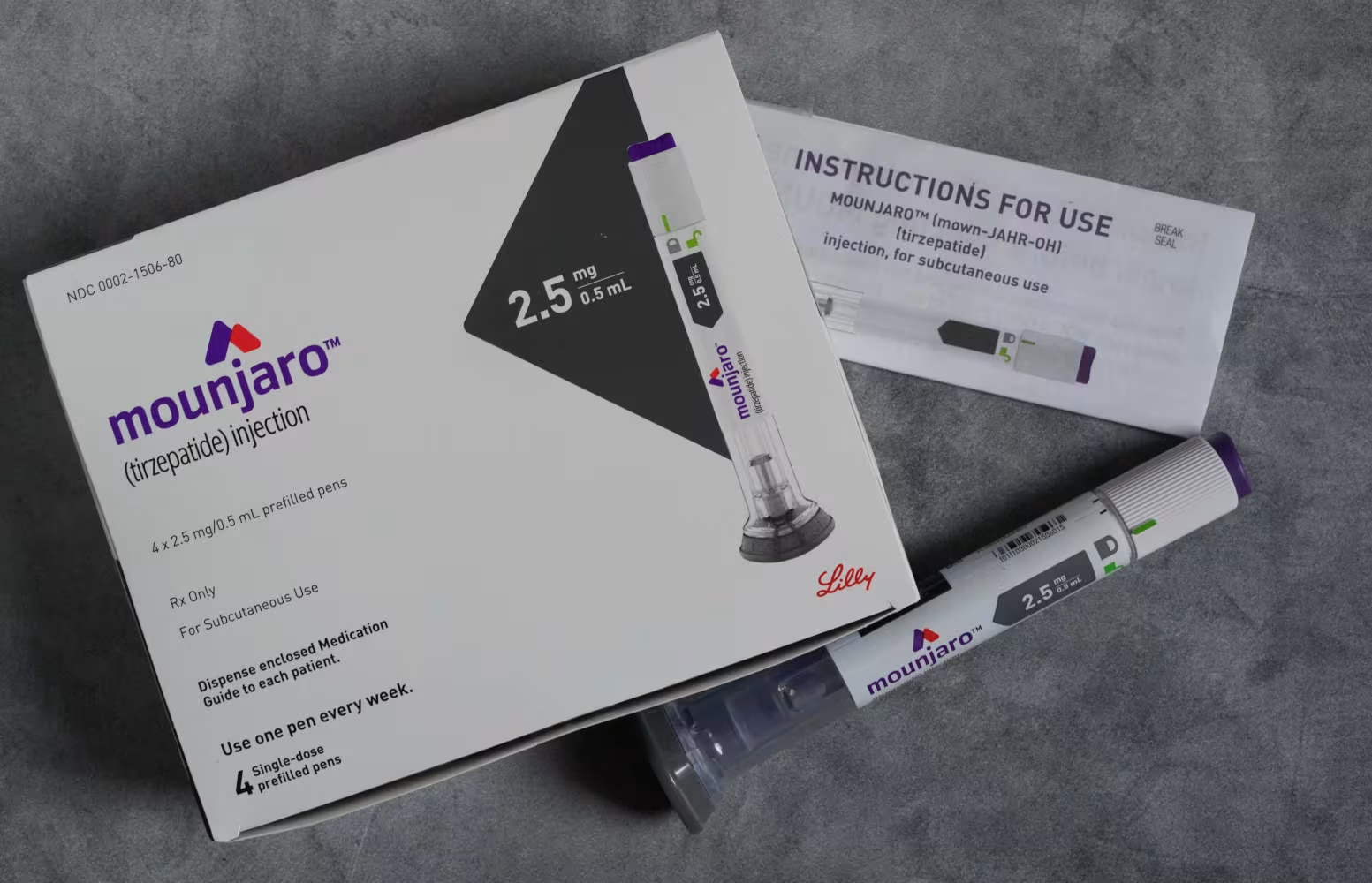
Using your Mounjaro KwikPen for the first time can feel unfamiliar, but preparing in advance can make the process straightforward. Your prescribing clinician should explain how to use the pen, and you should read the Patient Information Leaflet and Instructions for Use supplied with your medication before injecting.
Mounjaro is injected once a week. Choose a day that is easy to remember and try to administer your injection on the same day each week.
You can inject Mounjaro at any time of day, with or without food. The time you choose does not affect how the medicine works, so select a routine that is convenient and that you are likely to follow consistently.
Some people prefer to inject in the evening or before a quieter day, particularly when they are starting treatment, as side effects such as nausea, reduced appetite or digestive discomfort may occur. However, changing the injection time is not guaranteed to prevent side effects.
You do not need to eat before administering Mounjaro. The injection can be taken before or after a meal, or on an empty stomach.
During treatment, it may help to eat smaller portions, avoid very rich or fatty meals and maintain a balanced, reduced-calorie diet. These measures may make digestive side effects easier to manage while supporting your weight-management plan.
Drink fluids regularly throughout the day, especially if you experience nausea, vomiting or diarrhoea. These side effects can increase the risk of dehydration.
Water is generally the best option. If you are unable to keep fluids down, develop signs of dehydration or experience persistent vomiting or diarrhoea, contact your prescribing clinician for advice.
Mounjaro does not have to be warmed before injection. It can be used after removal from the fridge, provided it has been stored correctly and has not been frozen.
Some patients find that allowing the pen to sit naturally at room temperature for a short period makes the injection feel more comfortable. Do not attempt to warm the pen using hot water, a microwave, direct sunlight or another heat source.
After first use, the KwikPen may be stored below 30°C for up to 30 days. It must then be discarded, even if medication remains inside.
Before every injection:
Do not use the pen if it is damaged, expired, frozen or if you are uncertain whether it has been stored correctly.
Remove the pen cap and look at the medication through the cartridge holder.
The solution should appear clear and colourless to slightly yellow. Do not use the pen if the liquid is cloudy, discoloured, contains visible particles or appears frozen.
Contact your pharmacist or prescribing clinician if the medication does not look as expected.
Before starting, place the following items on a clean, flat surface:
Wash and dry your hands thoroughly, choose your injection site and make sure you have enough time to complete the process without interruption.
For your first injection, ask your prescribing clinician, pharmacist or another trained healthcare professional for guidance if you are unsure about attaching the needle, priming the pen, selecting the dose or administering the injection.
Your Mounjaro KwikPen will arrive in a box containing one pre-filled pen (4 weekly doses), a patient information leaflet, and a usage instruction leaflet. Read both leaflets carefully before your first injection.
Choose a consistent day and time each week for your injection. This helps maintain stable tirzepatide levels in your body and reduces the risk of side effects as your system adjusts to the medication.
Before you inject, ensure you have:
The Mounjaro KwikPen is a single-patient-use device containing 4 fixed doses — one per week for four weeks. Once all doses are used, the pen is disposed of safely. Follow the full steps below each time you inject.
1. Clean the red inner seal: Wipe the inner red seal with an alcohol swab and allow it to dry.
2. Attach a new needle: Remove the paper tab from the outer needle shield, then push the capped needle straight onto the pen and turn it clockwise until secure. Always use a new needle for every injection.
3. Remove needle shields: Remove the outer needle shield and set it aside — you will need this again later. Remove and discard the inner needle shield in your household bin.
4. Set to prime position: Slowly turn the dose knob until you hear 2 clicks and the extended line is shown in the dose window. This is the prime position.
5. Remove air bubbles: Hold the pen with the needle pointing upward and gently tap the cartridge holder to move any air bubbles to the top.
6. Prime and verify: Press the dose knob until it stops and slowly count to 5. The '0' icon should appear in the dose window. A small drop of medication at the needle tip confirms the pen is primed. If no medication appears, repeat steps 4–6 up to twice more. If still unsuccessful, change the needle and try once more — if it still fails, contact your prescribing clinician.
7. Prepare your injection site: Select your rotation site. You do not need to pinch or squeeze the skin — simply hold the pen ready over the clean, dry area.
8. Dial the dose: Turn the dose knob until it stops and the '1' icon (representing one 0.6ml dose) is displayed in the dose window.
9. Insert the needle: Insert the needle into the skin at your chosen injection site. Ensure you or your helper can clearly see the dose counter throughout the injection.
10. Deliver the dose: Press the dose knob fully until it stops, then hold it in and count slowly to 5. Before removing the needle, confirm the '0' icon is showing in the dose window — this means the full dose has been delivered.
11. Remove the needle: Pull the needle out smoothly. A small drop of medication at the needle tip is normal and will not affect your dose or results.
12. Cap and dispose of the needle: Carefully replace the outer needle shield and discard the capped needle in your sharps bin. Never recap with two hands.
13. Store the pen: Replace the pen cap and store your Mounjaro pen correctly until your next weekly dose.
Once opened, your Mounjaro pen can be stored either in a fridge (2–8°C) or at room temperature, as long as it does not exceed 30°C and is kept away from direct light and in its original packaging. If stored at room temperature, the pen must be used within 30 days. Refrigerated storage does not require discarding after 30 days, as the pen holds 4 weekly doses covering exactly 28 days.
Unopened, unused pens should always be stored in the fridge at 2–8°C until they are ready to use.
After your Mounjaro injection, it is normal to notice a small amount of blood or mild bruising at the needle site. Lightly press a small piece of gauze or cotton wool to the area — do not rub. Any bruising should resolve within a few days.
How to reduce pain and irritation
Some people may experience a reaction to Mounjaro at the site where they inserted the needle. Clinical trials show that Mounjaro injection site reactions were reported in 3.2% of patients compared to 1.7% of patients given a placebo. Up to 1 in 10 people may experience hypersensitivity reactions when using Mounjaro or other weight loss injections. Common reactions include:
If you experience any of these symptoms, let your doctor know. They may suggest trying a lower dose, changing the injection site, or using a topical over-the-counter cream to relieve any irritation. It should not be very painful to inject Mounjaro – any severe irritation, swelling, or redness should be seen by a doctor straight away. This could be a sign of an allergic reaction.
You should rotate your Mounjaro injection site every week. You can stay in the same general area (e.g. abdomen) but must move to a different section each week, or cycle across all three site areas. The same spot should not be used more than once every 4 weeks.
Most patients describe the injection as feeling like a small pinch rather than significant pain. Using a new needle every time, letting the pen warm to room temperature, and applying an ice pack beforehand can all help minimise discomfort.
No. Repeated injections at the same site increase the risk of lipohypertrophy (a buildup of fatty tissue under the skin), as well as local irritation, pain, and swelling. Always rotate as directed.
Mild redness, swelling, bruising, or itching at the injection site is a common and usually temporary reaction. As your body adjusts to tirzepatide, these symptoms typically improve. Trying a different injection area can also help, as skin sensitivity varies by location.
Nausea is a known side effect of Mounjaro, affecting more than 1 in 10 users, particularly when starting treatment or increasing your dose. You can still administer your injection if you feel nauseous, but inform your prescribing clinician so they can offer guidance or consider adjusting your dose.
Mounjaro is available in the UK through private prescription. At Private Medical Clinic, our clinicians can assess your suitability, prescribe Mounjaro, and provide ongoing medical support throughout your weight loss journey.
Same Day Online Booking
No Time Limits Appointments
Online Consultations Available
Latest Blog Posts
Semaglutide Weight Loss Injections - What You Need To Know

WeGovy Weight Loss Injections: A Breakthrough in Weight Management

Weight Loss Pens: A Comprehensive Guide To WeGovy vs. Mounjaro

Weight Loss Pens: Government Issues Warning On Fakes Sold In The UK

Weight Loss Pens: Are They Safe? A Complete Guide
Stricter Weight-Loss Jab Regulations in the UK: What It Means for Patients & Pharmacies
Ready to take the next step?

