
World Cancer Day, observed every year on 4th February, is far more than a global awareness initiative—it is a collective call to rethink how we understand, prevent, and treat cancer. As the burden of cancer continues to rise globally, including in the UK, where 1 in 2 people will face a diagnosis in their lifetime, the focus is shifting. Today, the conversation is no longer only about treating a disease; it is about caring for the person behind the diagnosis.
Aligned with the 2026 global theme "United by Unique," this year reinforces the urgent need to place individuals, their lived experiences, and their specific needs at the centre of every stage of care. It marks a key evolution in oncology—from a purely disease-focused approach to one that recognises the emotional, social, and life-long impact of cancer on patients and their families.
The global theme for 2025–2027, “United by Unique,” recognises a simple yet powerful truth: no two cancer journeys are the same. Each person’s experience is shaped by a complex intersection of factors:
While the disease may carry the same name, its impact on life, identity, and wellbeing is deeply individual. At the same time, the theme highlights unity. It brings together patients, caregivers, and medical professionals in a shared commitment to improve outcomes. It calls for systems of care that are not only clinically advanced but also empathetic and responsive to personal needs.
“United by Unique” moves the conversation beyond survival statistics. It urges us to listen to individual voices, respect personal choices, and design care pathways that address the whole person, not just the tumour.
While medical advancements have significantly improved survival rates, the experience of cancer extends far beyond clinical procedures. Patients navigate a world of fear, uncertainty, and lifestyle disruptions that medical interventions alone cannot solve.
People-centred cancer care focuses on understanding the medical condition within the context of a patient’s life and values. This approach integrates:
Early detection and prevention form the cornerstone of effective cancer care. Identifying cancer at the earliest stage dramatically improves treatment outcomes, increases the likelihood of cure, and helps preserve quality of life. Because cancer caught early often responds better to therapy and may require less aggressive treatment. In a people-centred model, empowering individuals with clear knowledge and timely access to screening is essential. At our clinic, we embrace this proactive approach through a combination of tailored clinical services and cutting-edge diagnostics:
We offer a wide range of cancer screening tests designed to detect early signs across multiple cancer types—ranging from breast and cervical screening using advanced imaging and cytology to prostate, bowel, and lung assessments. These personalised screening pathways help identify abnormalities before symptoms appear, giving patients the best chance for successful treatment.
Our approach integrates sophisticated tools and evidence-based testing strategies, including imaging and specialised panels that can detect early changes. By combining traditional clinical screening with forward-looking techniques, we aim to catch subtle signs sooner while ensuring patient comfort and confidence.
Screening isn’t “one size fits all.” We assess individual risk factors—such as family history, age, lifestyle, and genetics—to tailor recommendations that reflect each person’s unique needs. This helps ensure that screening intervals and methods are appropriate and meaningful.
Early detection also depends on the environment in which care is delivered. By offering private, supportive, and non-judgmental settings, we help individuals feel comfortable seeking preventive care without fear, embarrassment, or delay.
Early detection is not just about technology—it’s about ensuring every person feels informed, respected, and empowered at every step of their health journey.
Cancer care does not end with a clear scan. A compassionate ecosystem recognises that patients and their families face long-term physical and emotional adjustments.
Improving cancer outcomes requires a collective commitment. This includes informed individuals who recognise early warning signs, empowered families who participate in care, and healthcare systems focused on equity and access.
By uniting around the needs of each unique individual, we move towards a future of oncology that is not only scientifically advanced but also humane and inclusive. This is the spirit of “United by Unique”—where diverse experiences are acknowledged, yet everyone is supported through shared commitment and action.
The theme is "United by Unique," which focuses on people-centred, personalised, and compassionate care that respects the individuality of every patient's journey.
Early detection allows for treatment when the cancer is most responsive. For example, in the UK, bowel cancer diagnosed at Stage 1 has a 90% survival rate, compared to less than 10% if caught at Stage 4.
Beyond practical help, families provide vital emotional reassurance and help navigate treatment decisions. Seeking professional counselling as a family unit can also help manage the collective stress of a diagnosis.
Same Day Online Booking
No Time Limits Appointments
Online Consultations Available
Latest Blog Posts
.avif)
What is HIV and its symptoms?
.avif)
High Cholesterol Warning Signs: What to Look for on Your Face & Body

What Is Bacterial Vaginosis (BV)? Signs, Causes and Treatment That Actually Works

The 14 Regulated Food Allergens Explained | UK Food Law Guide
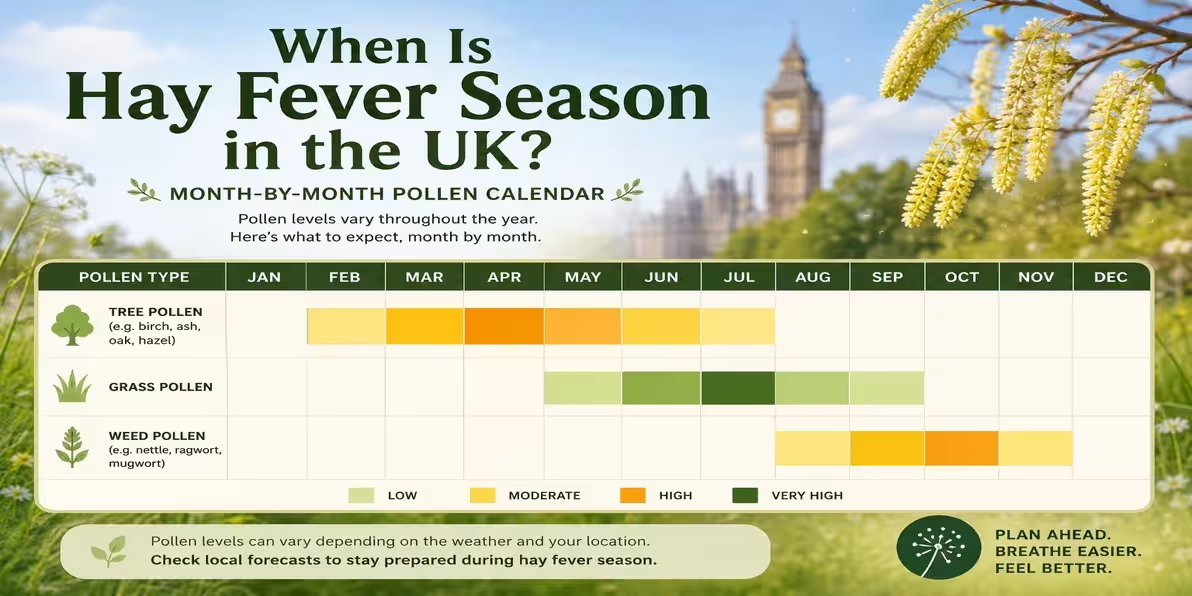
When Is Hayfever Season in the UK? Month-by-Month Pollen Calendar
Ready to take the next step?


