
Written by Dr. Simon Khela MBChB MRCGP, GMC Registered Doctor
Last reviewed: 03-08-2026
_________________________________________________________________________
A patient in her late twenties once told me she’d been managing "bad periods" since she was fourteen, missing school and later work for a day or two most months, and had been told by more than one clinician over the years that this was simply what her body was like. By the time she came to see me, she’d been living with debilitating pain for well over a decade. Investigations confirmed endometriosis. Her story isn’t unusual, it reflects a genuinely well-documented problem with how long this condition typically takes to diagnose in the UK.
Endometriosis affects an estimated one in ten women and people assigned female at birth of reproductive age in the UK, yet it remains widely misunderstood, both by the public and, at times, within healthcare itself. Understanding what it actually is, what causes it, and what treatment can realistically achieve is the first step toward getting the right help sooner rather than later.
This article covers:
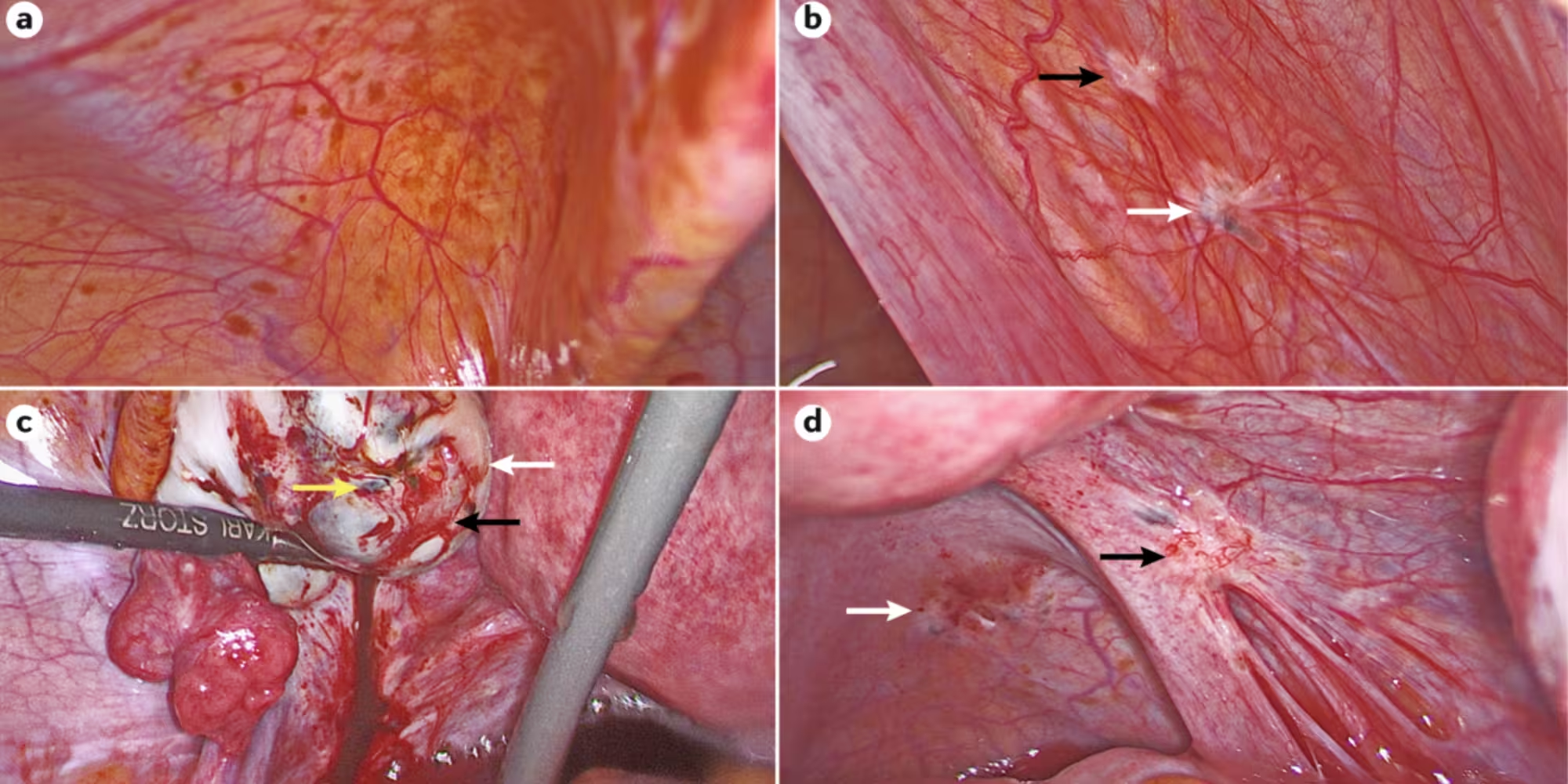
Endometriosis is a condition where tissue similar to the lining of the womb (the endometrium) grows outside the uterus, most commonly on the ovaries, fallopian tubes, and the lining of the pelvis, though it can occasionally be found elsewhere in the body. This tissue responds to the menstrual cycle in the same way the womb lining does, thickening and then breaking down, but because it has no way to leave the body, it causes inflammation, pain, and, over time, scar tissue.
Many patients are surprised to learn that, despite how common endometriosis is, medical science still doesn't have one definitive answer for what causes it. Several theories currently exist, and it's likely that more than one mechanism is involved.
Menstrual blood flows backward through the fallopian tubes into the pelvis instead of leaving the body. This is one of the longest-standing theories, though it doesn't fully explain why some women develop endometriosis and others don't despite this being a relatively common occurrence.
Cells outside the uterus change into endometrial-like cells under certain hormonal influences.
The body fails to clear misplaced endometrial cells effectively, allowing them to implant and grow.
Endometriosis is known to run in families, suggesting an inherited susceptibility.
A less common route where endometrial cells become implanted in a surgical scar, such as after a caesarean section.
A question I’m frequently asked is how to tell "normal" period pain apart from something that needs investigating. In practice, the pattern and severity matter more than any single symptom.
One of the most common concerns I see in practice is a patient assuming that because their pain is "just" period pain, it doesn’t warrant investigation. Severity that interferes with work, relationships, or daily life is never something to simply tolerate indefinitely.
This is a genuinely common point of confusion, partly because the two conditions share a similar underlying process and can occur in the same person at the same time.
Many patients are surprised to learn that having one of these conditions doesn't rule out the other, and in some cases, overlapping symptoms make it genuinely difficult to know which is contributing more to how someone feels without proper imaging and specialist assessment.
The average time to diagnosis in the UK has historically been reported at around eight years from the start of symptoms, a statistic that reflects real, systemic issues, including symptom overlap with other conditions and a persistent tendency to normalise severe period pain.
If initial assessment and treatment through primary care aren't resolving symptoms, a referral to a specialist, typically a gynaecologist, is the usual next step for further investigation.
Endometriosis is found in a significant proportion of women being investigated for infertility, though it's important to be clear that not everyone with endometriosis will have difficulty conceiving, and the relationship between disease severity and fertility impact isn't always straightforward.
For anyone trying to conceive with a known or suspected diagnosis, earlier discussion with a GP or an infertility clinic is generally more useful than waiting, since some treatment approaches for endometriosis (particularly certain hormonal therapies) are specifically not suitable while trying to conceive.
There's currently no cure for endometriosis, and treatment focuses on managing symptoms, improving quality of life, and, where relevant, supporting fertility.
Severe pain that disrupts daily life is never something to simply accept without investigation, regardless of how normalised period pain has historically been.
Ultrasound and MRI can miss smaller or superficial patches of disease. A normal scan reduces the likelihood but doesn’t rule it out entirely, which is why laparoscopy remains the definitive diagnostic test where genuine doubt remains.
Pregnancy can temporarily ease symptoms for some women due to hormonal changes, but it isn’t a cure, and symptoms often return afterwards.
Removing the uterus doesn't remove endometriosis tissue located elsewhere in the pelvis, so symptoms can persist for some patients even after this surgery, particularly if the ovaries are retained.
Endometriosis can cause significant chronic pain and other symptoms regardless of fertility plans, and treatment decisions should reflect the person's actual symptoms and priorities, not just reproductive plans.
Hormonal treatments are generally effective at reducing symptoms for many women, are non-surgical, and reversible, but they don't address any existing scar tissue and aren't suitable for those actively trying to conceive. Surgical treatment can offer more definitive symptom relief and address visible disease directly, but carries the usual risks of surgery and, particularly with more extensive procedures, doesn't guarantee symptoms won't eventually return.
Being honest about this matters. No single treatment works identically for everyone, and decisions often involve balancing symptom control, fertility plans, and personal preference, ideally discussed properly with a specialist rather than assumed from general information alone.
An online GP consultation or a private GP appointment is a reasonable starting point to discuss your symptoms properly and agree on next steps, whether that's initial treatment, further investigation, or a private blood test to check for related issues such as anaemia from heavy bleeding.
Early signs often include period pain that’s more severe than typical, heavy bleeding, and pelvic pain that continues outside of your period, though presentation varies considerably between individuals.
Yes. While heavy bleeding is common, some women with endometriosis have relatively normal bleeding but significant pain, and severity of one symptom doesn’t predict the others.
No, though they’re related. Endometriosis involves tissue growing outside the uterus, while adenomyosis involves similar tissue growing within the uterine muscle wall itself. The two conditions can occur together.
Larger endometriomas (cysts) can often be seen, but smaller, superficial patches of endometriosis frequently aren't visible on ultrasound, which is why a normal scan doesn't fully rule out the condition.
No. Many women with endometriosis conceive without difficulty, though the condition is found more frequently in those being investigated for infertility than in the general population.
Laparoscopy, a keyhole surgical procedure allowing direct visualisation of the pelvis, remains the definitive diagnostic test, though treatment can often begin based on symptoms and other tests without this being done first.
Yes, it’s possible for endometriosis to recur or for symptoms to persist after surgery, particularly if not all disease was removed or if the ovaries, which continue producing hormones, are retained.
Symptoms often improve significantly after menopause, since the condition is driven by hormonal cycles, though this isn't universal and some women continue to experience symptoms.
Some women report symptom improvement with dietary changes, regular exercise, or pelvic physiotherapy, though the evidence base for lifestyle measures alone is more limited than for medical or surgical treatment.
It’s estimated to affect around one in ten women and people assigned female at birth of reproductive age in the UK, making it one of the more common gynaecological conditions.
Same Day Online Booking
No Time Limits Appointments
Online Consultations Available
Latest Blog Posts

Adult Asthma Explained: Symptoms, Silent Attacks, Causes, Testing, and Late-Onset Diagnosis
Endometriosis: Symptoms, Causes, Treatment
Rheumatoid Arthritis - Symptoms, Causes, Treatment

Non-Allergic Rhinitis: Symptoms, Triggers, and How It Differs From Hay Fever

Understanding ADHD: Symptoms, Treatments, and the Value of Private GP Services

Defeat Hay Fever: Understanding and Managing Symptoms in the UK
Ready to take the next step?

