
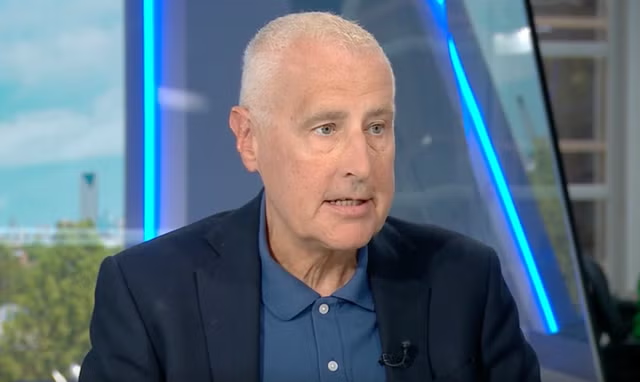
Former Sky News presenter Dermot Murnaghan has revealed that he has stage 4 prostate cancer after becoming seriously ill while on holiday. Despite experiencing no obvious warning symptoms, he is now encouraging men—particularly those aged over 50 and those with a family history of prostate cancer—to proactively request a PSA (Prostate-Specific Antigen) blood test.
His announcement has sparked renewed discussion about prostate cancer screening in the UK and highlighted an important reality: many men with early prostate cancer have no symptoms at all.
Dermot Murnaghan shared his diagnosis during an interview with Sky News presenter Anna Jones, explaining that his cancer came as "a real bolt from the blue."
Although he had reported on men's health issues throughout his broadcasting career, including prostate cancer awareness campaigns, he admitted that he repeatedly delayed arranging his own PSA blood test.
Instead, he became seriously ill while on a foreign holiday. After returning to the UK, he underwent investigations through the NHS and was diagnosed with stage 4 prostate cancer.
Reflecting on his experience, Murnaghan said that life simply "got in the way," despite knowing he should have been screened.
His message is now simple: don't wait until symptoms appear.
Dermot Murnaghan has confirmed that he has stage 4 prostate cancer, an advanced form of the disease in which cancer has spread beyond the prostate.
His diagnosis has drawn widespread public attention because he experienced no obvious early symptoms before becoming seriously ill.
His experience serves as a reminder that prostate cancer can often develop silently, making early conversations with a Private GP about PSA testing particularly important for men at higher risk.
According to Murnaghan, he became seriously ill while on holiday before returning to the UK for medical assessment.
Following investigations through the NHS, he was diagnosed with stage 4 prostate cancer.
Although he has publicly discussed how his diagnosis happened, he has not disclosed the exact date of diagnosis or the full timeline of his treatment.
During his interview, Murnaghan stressed that diagnosing prostate cancer earlier benefits both patients and the healthcare system.
He explained:
"Treating people who get to my stage... there's an awful lot of things that are being thrown at me that are costing a lot of money."
He also added that diagnosing cancer earlier allows treatment to begin sooner, improving outcomes while reducing the need for more intensive treatments later.
His comments have renewed calls for greater awareness of PSA testing, particularly because the UK currently has no routine national prostate cancer screening programme.
Instead, eligible men must discuss the PSA blood test with their GP and request it.
A PSA (Prostate-Specific Antigen) blood test measures the amount of PSA protein produced by the prostate gland.
Higher PSA levels can sometimes indicate:
Because several conditions can raise PSA levels, the blood test is not a definitive cancer test.
Instead, it helps doctors decide whether further investigations may be required.
Many people searching online want to know Dermot Murnaghan's PSA level.
However, he has not publicly disclosed his PSA result.
It is also important to understand that PSA levels alone cannot determine whether someone has prostate cancer or how advanced it is.
Doctors interpret PSA results alongside:
This combination provides a much clearer picture than PSA alone.
Yes, one of the biggest misconceptions about prostate cancer is that symptoms always appear early.
In reality, many men have no symptoms whatsoever during the earliest stages of the disease.
This is exactly why Dermot Murnaghan's story has resonated with so many people.
As prostate cancer grows, it may begin affecting the urinary tract or spread to other parts of the body, leading to noticeable symptoms.
By then, treatment can become more complex.
For this reason, many doctors encourage men who are at higher risk to discuss PSA testing before symptoms develop.
Early prostate cancer often causes no symptoms.
As the disease progresses, symptoms may include:
These symptoms do not always mean prostate cancer is present, but they should be assessed by a healthcare professional.
Although there is no routine screening programme in the UK, many men may benefit from discussing PSA testing with their GP as part of a wider well man health check.
This includes men who:
Your GP can explain the benefits and limitations of PSA testing before arranging the blood test. If prostate or other cancers run in your family, DNA and genetic risk testing can help clarify your personal risk profile before you decide.
The PSA blood test is a valuable tool, but it is not perfect.
A raised PSA does not automatically mean cancer.
Similarly, some men with prostate cancer may have PSA levels that are not significantly elevated.
Because of this, doctors interpret PSA results alongside imaging and other investigations.
Modern prostate cancer diagnosis often combines:
Using these tests together improves diagnostic accuracy.
If your PSA result is raised, your doctor may recommend:
A raised PSA result is not a diagnosis of prostate cancer, but it does require appropriate assessment.
Stage 4 prostate cancer means the cancer has spread beyond the prostate gland.
It may affect:
Although stage 4 prostate cancer cannot always be cured, modern treatments can often control the disease, reduce symptoms and improve quality of life for many years.
Treatment plans vary depending on the individual.
Dermot Murnaghan has not publicly shared the details of his personal treatment, so it is important not to assume which therapies he may be receiving.
Murnaghan's announcement comes as prostate cancer diagnoses in England have risen sharply — up 9% in a single year, and now the most commonly diagnosed cancer in the country.
Healthcare organisations have called for faster diagnosis, improved access to testing and greater public awareness to help identify cancers earlier when treatment is often more successful.
When prostate cancer is detected early, treatment options are generally broader and outcomes are often better.
Earlier diagnosis may:
Dermot Murnaghan's experience highlights why acting before symptoms appear can make a significant difference.
In the UK, there is currently no national prostate cancer screening programme.
Men who wish to have a PSA blood test usually discuss it with their GP, who can explain the benefits and limitations before arranging testing if appropriate.
Some people also choose private healthcare, which may offer quicker access to appointments, PSA testing, independent second opinions and onward investigations where clinically indicated.
Regardless of where the test is performed, any abnormal result should always be assessed by an appropriately qualified healthcare professional.
If you're aged 50 or over, have a family history of prostate cancer, are experiencing urinary symptoms, or simply want reassurance, don't wait for symptoms to appear. Early assessment and PSA testing can help identify potential problems before they become more serious.
Same-day private GP appointments available. Our GMC-registered doctors can assess your prostate health, discuss whether a PSA blood test is appropriate, review your individual risk factors, and arrange further investigations or referrals where needed. No referral needed.
Select a Private GP Clinic near your location now:
If you are over the age of 50, have a family history of prostate cancer, or have concerns about your prostate health, speaking with a GP about PSA testing may be appropriate.
At Private Medical Clinic, our experienced clinicians can discuss your individual risk factors, arrange PSA blood testing where suitable, and provide rapid access to further investigations if required.
Early assessment provides reassurance for many men and allows prompt referral when additional care is needed.
Book a Private GP Appointment today to discuss whether PSA testing is right for you, or check our current fees beforehand.
Former Sky News presenter Dermot Murnaghan publicly urged men to demand prostate cancer screening after revealing his own stage-four diagnosis. His story underscores how prostate cancer often has no early symptoms — making proactive PSA blood testing essential for men, particularly those over 50 or with a family history.
Early prostate cancer often has no symptoms. Later signs include frequent urination, weak flow, blood in urine or semen, bone pain, and unexplained weight loss. Because early symptoms are absent, regular PSA screening is the only reliable way to detect it before it advances.
Yes — especially men over 50, those with a family history of prostate cancer, and Black men who have a higher risk. The NHS doesn't routinely screen all men, but you can request a PSA test. Alternatively, private cancer screening offers same-day testing with fast results and expert GP review.
Screening typically involves a PSA (Prostate-Specific Antigen) blood test and a digital rectal examination. If PSA levels are elevated, further investigation including MRI or biopsy may follow. Private health check-ups include comprehensive cancer marker testing with results and expert consultation within 24–48 hours.
Don't wait for symptoms — book a Well Man health check or private cancer screening today. Regular PSA testing, alongside cholesterol, blood pressure, and diabetes checks, gives men a complete picture of their health — catching problems early when treatment is most effective and outcomes are best.
Same Day Online Booking
No Time Limits Appointments
Online Consultations Available
Latest Blog Posts

The 14 Regulated Food Allergens Explained | UK Food Law Guide
.avif)
What is autoimmune disease?

Struggling with Brain Fog? Here's How to Fix It

What Teas Can Help Relieve Migraines?

Diabetes: Your Comprehensive Look At This Chronic Condition
.avif)
High Cholesterol Warning Signs: What to Look for on Your Face & Body
Ready to take the next step?

